Gorilla wilderness as a living classroom for conservation
Gorilla wilderness is not just a dramatic backdrop for photographs, it is a living classroom where conservation becomes tangible. In the tropical forests of equatorial Africa, where gorillas inhabit dense wood and misty ravines, every step on the trail reveals how fragile this ecosystem remains. Here, the largest great apes share about 98.3% of their DNA with humans, and that single statistic quietly sets the emotional height of the experience, according to WWF and long-term primate research programmes.
Visitors often arrive thinking only about a close encounter with a gorilla family, yet they leave understanding how habitat loss, poaching, and disease have shaped the species’ story over the past century. Guides explain that gorillas live in ten African countries, but viable sets of protected areas are concentrated in a few strongholds such as Volcanoes National Park in Rwanda, Bwindi Impenetrable National Park in Uganda, and the Virunga region of the Democratic Republic of Congo. These forests form a connected set of refuges where conservation organizations, local governments, and community groups coordinate anti-poaching patrols, research programs, and carefully managed tourism based on IUCN best-practice guidelines.
During a trek, you move in a small, controlled group, often limited to eight guests, and you will spend a strictly regulated time with one habituated gorilla group. Rangers set high standards for behaviour, enforcing a minimum distance of around 7 m, face mask use in some regions, and a maximum visit of one hour to reduce stress and disease risk. The rules may feel strict at first, yet they are the product of decades of field experience and they are the reason gorilla populations in several parks are now slowly increasing, with recent surveys in some mountain gorilla strongholds indicating gradual growth into the low thousands, as reported by national park authorities and IUCN Red List assessments.
Reading the forest: how to prepare for a gorilla trek
Preparation for a journey into gorilla wilderness begins long before your boots touch the forest floor. You will need to obtain a gorilla trekking permit from the relevant wildlife authority, and these permits are limited sets that can sell out months in advance during peak seasons. Prices are high because each permit is a conservation product that funds ranger salaries, veterinary care, and community projects around the parks, with some countries charging several hundred to over a thousand US dollars per person, as outlined by official tourism boards and park fee schedules.
Physical readiness matters more than many travellers expect, because the terrain can be steep, muddy, and tangled with fallen wood and vines. Trails may climb from about 1,800 m to over 2,500 m in a single morning, so altitude and slope combine to test your fitness and balance at every step. Porters are available as a professional support équipe, and hiring them is not charity but a structured business model that channels tourism revenue directly to local households while giving you crucial assistance on difficult sections, a point often highlighted in responsible travel guidelines.
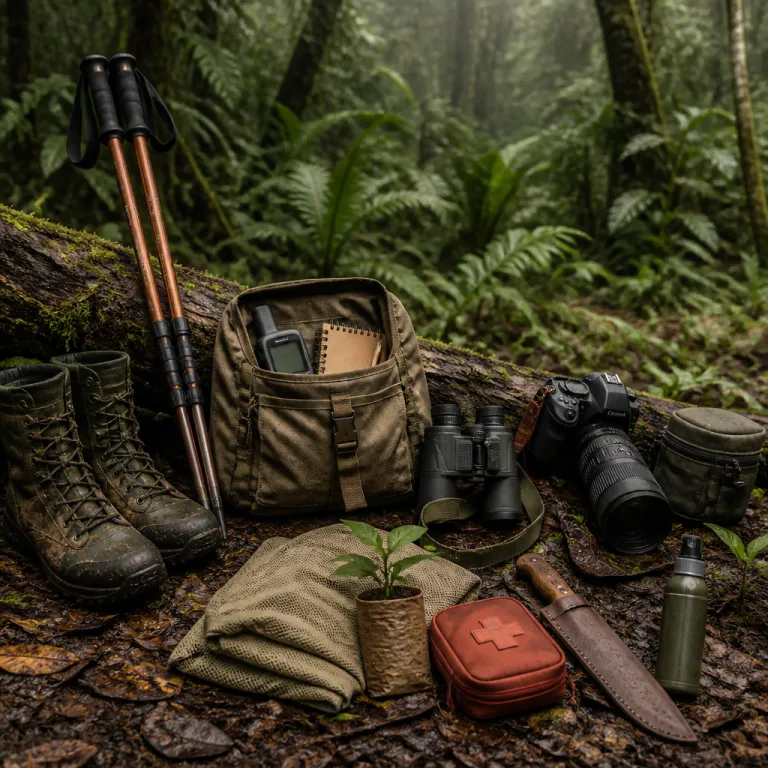
Packing should focus on practicality rather than style, with layered clothing, waterproof outerwear, and gloves to protect your hands from rough bark or thorny stems. Sturdy boots with high ankle support and deep slides of tread will help you stay upright on slick clay and moss-covered roots. Many lodges provide wooden walking sticks, which act almost like a natural swing beam for your body, giving you a stable third point of contact when the trail suddenly tilts or the mud pulls at your feet.
Wildlife enthusiasts who already enjoy detailed field guides on raptors and other predators often appreciate expanding their reading list before travelling. Exploring in-depth articles on topics such as raptors, habitats, and conservation illustrates how different ecosystems face parallel pressures from land use change and human activity. Approaching gorilla trekking with this broader conservation mindset will enrich every moment in the forest, from the first distant chest beat to the quiet rustle of leaves as a silverback shifts his weight and younger animals test their climbing skills.
From play to protection: what young gorillas teach us
One of the most moving aspects of gorilla wilderness is watching youngsters at play among the trees. Juvenile gorillas treat every fallen trunk, vine, and branch of wood as an opportunity to climb, tumble, and swing in a way that feels almost childlike. Their games are not random, because each playful swing and roll helps them develop balance, strength, and social skills that will matter when they become adults and take on roles within the troop.
Guides often compare a lively gorilla clearing to a forest playground, where natural structures act like organic playsets for the troop. You may see a youngster clamber up a sloping trunk, pause at a safe height, then launch into a controlled slide down a bank of leaves, while siblings chase and wrestle below. These moments of play are not only charming for the visitor, they are also a sign of a relatively secure group that has enough food, space, and social stability to invest energy in non-essential behaviour rather than constant vigilance.
Watching these scenes, it becomes easier to understand why conservationists sometimes use metaphors from human childhood when communicating with donors and policymakers. They speak of protecting the forest as if it were a carefully designed swing set for the next generation, where every branch and clearing must be safe from the equivalent of insect damage, logging, and encroachment. For travellers who want to deepen their understanding of long-term species survival, reading about the ancient origins of other herbivores, such as the pronghorn in North America and how long pronghorn date back in the fossil record, can provide a useful comparison to the evolutionary journey of gorillas and the timescales involved in their adaptation.
In the forest, rangers sometimes pause to answer questions about behaviour, ecology, and genetics, and they draw on decades of research to do so. When guests ask where these animals live and why they are endangered, guides may respond with clear, data-based statements such as “Gorillas inhabit tropical forests in equatorial Africa.” and “Why are gorillas endangered? Due to habitat destruction, poaching, and disease.” Hearing these lines in the presence of a feeding silverback gives them a weight that no brochure can match, turning abstract facts into lived experience and reinforcing the urgency of conservation.
Community ownership: when gorilla wilderness supports local lives
Gorilla conservation succeeds only when local communities see clear benefits from protecting the forest. Around many parks, residents once viewed gorillas as competitors for land and crops, but carefully structured tourism business models have changed that perception. Today, revenue sharing schemes, employment opportunities, and community-owned lodges create a direct link between healthy gorilla populations and household income, making conservation a practical as well as ethical choice.
In practice, this means that every trekking permit, every night in a lodge, and every guided walk contributes to a wider economic set that includes porters, craftspeople, farmers, and transport providers. When a visitor pays for a high quality product such as a guided trek, a portion of that fee will support ranger patrols, veterinary interventions, and education programmes in surrounding villages. This approach mirrors broader trends in conservation tourism, where community ownership of conservancies has been shown to transform attitudes and reduce conflict when local people have a genuine stake in wildlife, as documented in case studies from East and Central Africa.
Travellers can reinforce these positive dynamics through their choices on the ground. Selecting operators with transparent policies, fair wages, and clear environmental standards sends a strong signal that the international customer values ethical practice over short-term savings. Asking questions about how your money flows, how many local staff are employed, and how conflicts with wildlife are managed will encourage operators to maintain high standards and to keep community relationships at the centre of their business strategy.
In many villages, former poachers now work as trackers, porters, or guides, using their forest knowledge to protect rather than exploit wildlife. This shift is not accidental, it is the result of long-term engagement, training, and trust building between conservation organizations, governments, and community leaders. When you walk into gorilla wilderness with such a guide at your side, you are not just a spectator, you are a participant in a complex social and ecological story that continues to evolve and that depends on ongoing community support and fair benefit-sharing.
Ethical trekking: rules, responsibilities, and real impact
Ethical behaviour in gorilla wilderness is not an optional extra, it is the foundation that keeps both humans and apes safe. Before each trek, rangers brief guests on strict protocols that cover distance, noise levels, photography, and health requirements. These rules may seem detailed, yet they are grounded in scientific research on disease transmission, stress, and long-term habituation effects that can influence gorilla survival.
One of the most important responsibilities is to stay away from the forest if you feel unwell, even if you have waited a year for this journey. Gorillas are susceptible to many human respiratory illnesses, and a single infected visitor could trigger an outbreak in a small group. Wearing a mask when requested, turning away to cough or sneeze, and using hand sanitizer before entering the forest are simple actions that will significantly reduce risk and demonstrate respect for the animals’ vulnerability.
Distance rules are equally crucial, with a minimum of around 7 m maintained whenever possible, though gorillas sometimes choose to close that gap themselves. Guides will position the group carefully, often using natural features such as a fallen wooden log or a dense thicket as a visual barrier, and they will ask you to remain in a tight set rather than spreading out. Flash photography is prohibited, and sudden movements such as raising a camera too quickly or trying to swing around for a better angle can startle the animals and disrupt natural behaviour.
Respect for the habitat extends beyond the immediate encounter, because every piece of litter, every off-trail shortcut, and every careless step on fragile seedlings has a cumulative impact. Staying on designated paths, carrying out all waste, and avoiding loud conversations helps preserve the forest’s integrity for future treks. When visitors consistently follow these guidelines, they reinforce the message that gorilla tourism can coexist with conservation, rather than undermining it, and they help safeguard the experience for future generations while supporting long-term monitoring.
From garden swingsets to forest canopies: rethinking play in nature
Many travellers who arrive in gorilla wilderness grew up with garden swing sets, slides, and wooden play structures that shaped their earliest memories of outdoor play. Watching young gorillas in their natural habitat can trigger a quiet comparison between those human-made swingsets and the forest’s own intricate architecture of branches, vines, and trunks. The contrast invites a deeper reflection on how we design spaces for children and how those designs influence their relationship with nature and wild places.
In a typical suburban garden, a wooden swing set might be built from cedar or other durable wood, with a sturdy swing beam, metal chains, and plastic slides designed to meet safety standards and often backed by a multi-year warranty. Parents choose these products because they promise stability, resistance to insect damage, and a predictable play environment where height, angles, and loads are carefully calculated. Brands such as Gorilla Playsets have built a business around offering high quality wooden swing sets that can withstand weather and time, giving families a reliable structure for outdoor play that echoes, in miniature, the climbing challenges of a forest and the sense of adventure children feel on a trail.
In the forest, by contrast, every branch is a potential swing, every slope a natural slide, and every clearing a flexible play zone that changes with each season. Young gorillas do not need manufactured playsets, because the canopy itself offers endless variations in height, angle, and challenge, encouraging constant adaptation and problem solving. Observing this, some parents return home inspired to set high standards for their own gardens, integrating more natural elements such as logs, boulders, and living trees alongside or instead of conventional swing sets to foster curiosity about the wider environment and the wild habitats that inspired those designs.
This does not mean that a well-built wooden swing or a carefully engineered swing set has no place in a child’s life. Rather, it suggests that we can treat these structures as gateways to a broader appreciation of outdoor spaces, using them to spark curiosity about forests, wildlife, and conservation. When a child asks about the gorilla logo on a product brochure or notices that their play structure is made from cedar, it becomes an opportunity to talk about real gorillas, real forests, and the responsibility that comes with using natural materials and supporting conservation-minded companies that acknowledge their environmental footprint.
Planning your gorilla wilderness journey: practical steps and timing
Transforming a dream of gorilla wilderness into a concrete itinerary requires careful planning and realistic expectations. The first decision is where to trek, with Rwanda, Uganda, and the Democratic Republic of Congo each offering distinct experiences, permit prices, and logistical considerations. Working with a specialist safari operator who understands the nuances of each destination will save you time and reduce the risk of costly mistakes, especially if you are combining several parks or adding other wildlife destinations.
Seasonality plays a significant role in shaping your experience, because rainfall patterns affect trail conditions, visibility, and even the mood of the forest. Drier months often offer easier walking and clearer views, while wetter periods bring lush foliage, dramatic mist, and fewer visitors on the trails. Either way, you should be prepared for mud, humidity, and rapid weather shifts, as equatorial forests can swing from bright sun to heavy rain within a single hour and still feel cool under the canopy.
When budgeting, remember that the permit is only one component of the overall cost, which also includes flights, transfers, accommodation, and guiding. Many travellers choose to combine gorilla trekking with classic savannah safaris in Kenya or Tanzania, creating a varied set of wildlife experiences that range from dense forest to open plains and coastal reserves. Booking at least a year in advance for peak periods is wise, especially if you have fixed travel dates or a preference for specific lodges close to the park gates and departure points.
Finally, consider the emotional and ethical dimensions of your journey alongside the logistical ones. Reading about conservation efforts from organizations such as WWF and The Gorilla Organization before you travel will help you understand the broader context of your visit and the status of different gorilla subspecies. Arriving informed, respectful, and ready to follow guidelines means that your time in gorilla wilderness will contribute to a positive legacy for both the apes and the people who share their forest home, rather than adding pressure to already vulnerable habitats.
Key figures from the gorilla wilderness
- Gorillas share about 98.3% of their DNA with humans, according to WWF and other primate research sources, which underlines how closely our health and behaviour can affect theirs and why disease prevention protocols are so strict.
- Wild gorilla populations are currently found in 10 African countries, based on data from The Gorilla Organization and IUCN assessments, yet viable tourism and conservation programmes are concentrated in a smaller subset of these nations where security and infrastructure allow regular monitoring.
- Conservationists report that several monitored gorilla populations have shown gradual increases over recent decades, a trend linked to habitat protection, anti-poaching patrols, and tightly regulated tourism in key national parks, as documented in IUCN Red List updates and park census reports.
- Typical gorilla trekking groups are limited to around 8 visitors per habituated group, which helps reduce stress on the animals while still generating meaningful revenue for parks and communities that depend on tourism and related services.
- Many national parks allocate a fixed percentage of permit revenue, often around 10% or more according to official revenue-sharing policies, directly to neighbouring communities, creating a financial incentive to protect gorilla habitat and support long-term conservation.
Frequently asked questions about gorilla wilderness
Where do gorillas live in the wild?
Gorillas inhabit tropical forests in equatorial Africa, with populations spread across ten countries including Rwanda, Uganda, and the Democratic Republic of Congo. They occupy a range of habitats from lowland swamps to high altitude cloud forests, depending on the subspecies. Protected areas such as Volcanoes, Bwindi, and Virunga National Parks are key strongholds for tourism and conservation and serve as focal points for research and monitoring by national wildlife authorities and international partners.
How are gorillas protected from current threats?
Gorillas are protected through a combination of habitat conservation, anti-poaching laws, and community involvement around key parks. Governments and organizations such as WWF fund ranger patrols, monitoring programmes, and veterinary interventions for injured or sick animals. Regulated tourism also plays a role by generating revenue that supports both conservation activities and local livelihoods, creating a powerful incentive to keep gorillas alive and their forests intact rather than converting land to short-term uses.
Why are gorillas considered endangered today?
Gorillas are endangered primarily because of habitat destruction, poaching, and disease, especially human-transmitted illnesses. Logging, agriculture, and infrastructure projects fragment forests, while illegal hunting targets both gorillas and other wildlife for bushmeat or trade. Disease outbreaks, including those linked to human contact, can have severe impacts on small, isolated populations that already face pressure from shrinking habitat and climate-related changes to food availability.
What permits and rules apply to gorilla trekking?
Travellers must obtain a gorilla trekking permit from the relevant national authority, and daily numbers are strictly limited to protect the animals. Rules typically include maintaining a minimum distance of around 7 m, limiting viewing time to about one hour, and avoiding visits when you are ill or recovering from infection. Rangers also enforce guidelines on group size, photography, and behaviour to minimise stress and disease risk for the gorillas and to keep encounters predictable, safe, and consistent with conservation objectives.
How does my visit help local communities and conservation?
Your permit fee and related travel spending contribute directly to park management, ranger salaries, and community projects such as schools, clinics, and water systems. Many residents work as guides, porters, and lodge staff, so tourism provides employment that depends on healthy gorilla populations and intact forests. By choosing responsible operators and respecting all guidelines, you help demonstrate that living gorillas are more valuable than any short-term exploitation of their habitat and that conservation can support human wellbeing while safeguarding biodiversity.