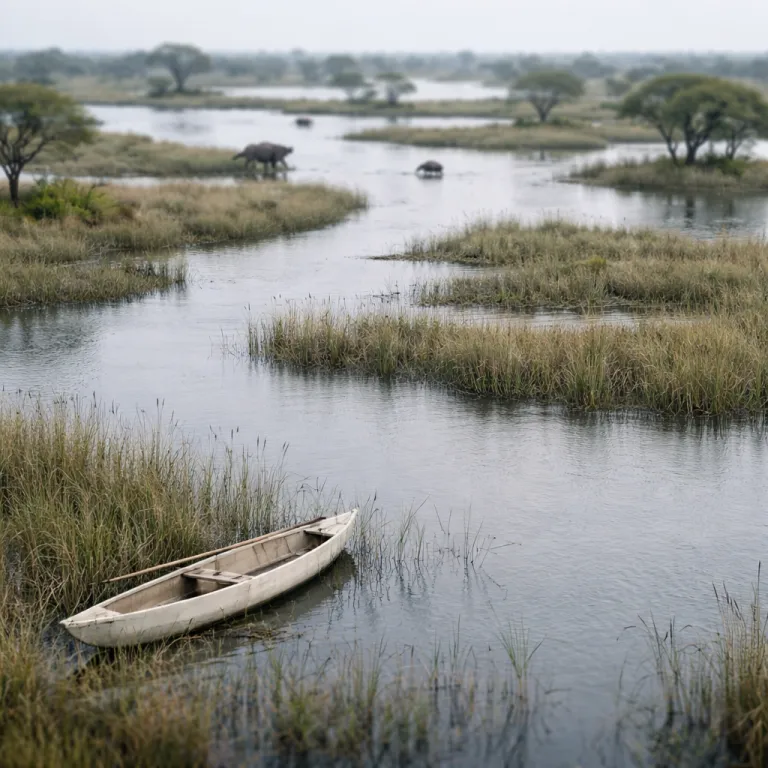
Reading the water: how the Okavango Delta flood really works
The Okavango Delta looks timeless, yet every day of the flood season redraws its map. Heavy rains fall far away in Angola's highlands, then take roughly four months to travel south into Botswana and fan out across the delta. That delayed pulse of water is why a mokoro tour in May feels very different from the same safari in late Aug or Sep.
Average annual rainfall in Angola’s highlands sits around 1 200 mm, and in strong years the Okavango Delta can swell to roughly 15 000 km² at peak flood. Those deeper channels are what make an Okavango Delta mokoro safari in 2026 so compelling for travelers who care about water based wildlife encounters. Seasonal outlooks from the Angola Meteorological Institute (2025–2026 wet season summary) and basin flow modelling by the Okavango Research Institute (Hydrology Bulletin, January 2025) both point to above average inflows, which in turn mean more navigable routes, longer safari days on the water, and access to reed beds that are usually too shallow for mokoro tours.
The flood does not arrive as a single dramatic day of change; it creeps in stages from Mar–Apr through Jun–Jul, then slowly recedes from Sep–Oct into Nov–Dec. Early in the season, channels near Maun open first, while remote concessions and the Moremi Game Reserve fill later. By Jul–Aug, the classic Okavango Delta view emerges, with islands ringed by deep water, ideal for silent game viewing from a mokoro rather than a vehicle.
Why 2026 is a benchmark year for mokoro safaris
Exceptional flood years in the Okavango create a very specific kind of safari, and 2026 is shaping up as one of those benchmark seasons. Higher water levels mean mokoro polers can glide into papyrus corridors that are usually reserved for motorboats, extending both the duration and the intimacy of each tour. For couples planning a once in a lifetime Okavango Delta canoe journey in 2026, this translates into more remote channels, fewer join group departures, and a stronger sense of being alone with the wildlife.
Local conservation teams and safari operators in Botswana are already planning new water routes that link permanent lagoons with seasonal floodplains. In its 2025–2026 tourism planning note, the Botswana Tourism Organisation highlights pilot routes that use deeper delta channels to reduce pressure on vehicle tracks, which benefits both the habitat and the game viewing. When you compare this to a classic national park drive in places like Chobe National Park, the contrast is clear: here the water, not the road, dictates the rhythm of your safari days.
These conditions also sharpen the value of Botswana’s high value, low volume model, where fewer travelers pay more to protect a fragile ecosystem. If you care about where your safari dollars go, read our guide on private conservancies versus national parks before locking in an Okavango Delta itinerary. In a year when the delta is at its most generous, choosing the right concession or game reserve is the difference between a crowded channel and a mokoro glide where the only sound is the pole in the water.
Mokoro versus vehicle: two very different safaris in one delta
A mokoro safari is not a watery version of a game drive; it is an entirely different way of being in the Okavango. You sit low, almost at water level, while your poler stands at the stern and reads the channels like a tracker reads dust. The silence is profound, and on an Okavango Delta mokoro trip in 2026 that quiet will be amplified by the wider lagoons and longer routes opened by the high flood.
On land, vehicle based safari tours in the Moremi Game Reserve or the fringes of Chobe National Park excel at big predator sightings and fast paced game viewing. Guides can cover long distances in a single day, moving from lion tracks at dawn to elephant herds by late morning. A mokoro tour, by contrast, trades speed for nuance; you drift past reed frogs, watch jacanas stepping on lily pads, and feel the temperature shift as you slide from open lagoon into shaded channel.
The most rewarding itineraries in Botswana blend both styles, often starting with two or three safari days focused on water before shifting to a drier concession. Self drivers who cut their teeth on a Kruger self drive safari are often surprised by how little they miss the steering wheel once they settle into a mokoro rhythm. For couples, that mix of slow water travel and classic 4x4 tours delivers a layered Okavango experience rather than a single note safari.
Where to stay: camps that truly deliver on the water
Not every camp in the Okavango Delta can offer a genuine mokoro experience throughout the flood, even in a strong year. The key is permanent water access, ideally on a channel that deepens further during Jun–Jul and Jul–Aug rather than drying to a trickle by Sep–Oct. When you plan an Okavango Delta mokoro focused safari in 2026, prioritise concessions with both deep lagoons and nearby floodplains for flexible game viewing.
Camps in the heart of the delta, away from Maun and the drier fringes, tend to offer the most reliable mokoro tours. Many pair traditional dugout canoes with small motorboats, allowing you to travel out by engine and return in silence as the day cools. In a year of excellent water, some operators will extend their safari tours deeper into seasonal channels, so read recent tours reviews carefully and ask how many hours you can expect on the water each day.
For travelers keen to combine water and classic big game, look for properties that link easily with the Moremi Game Reserve or even a short hop to Chobe for a contrasting river based safari. A few high end itineraries also stitch in a flight to Victoria Falls, turning a pure Okavango Delta focus into a wider Africa journey without losing the intimacy of the mokoro experience. If you prefer to join group departures rather than book privately, secure space early; in exceptional flood years, the best water based camps in Botswana fill quickly.
When to go, what it costs, and how to build a smart route
Timing an Okavango Delta mokoro safari in 2026 is about more than choosing a dry season month at random. Water based activities usually begin in earnest from late May, building through Jun–Jul and peaking around Jul–Aug when channels are deepest and islands are fully ringed by water. By Sep–Oct, the flood starts to recede, concentrating wildlife on shrinking floodplains but shortening some mokoro routes.
For couples who prioritise long mokoro days over dense predator action, the heart of the flood is ideal, especially if you combine three or four safari days on the water with a drier camp. Those who want a broader Africa circuit often add Chobe for elephant herds and a day at Victoria Falls, using Maun as the logistical hinge between delta, river, and waterfall. Shoulder periods like Mar–Apr or Nov–Dec can work for value seekers, but water levels may be too low for extended mokoro tours, so always ask operators for current channel conditions.
Botswana’s high value, low volume strategy means per night rates are higher than in many other national park destinations, especially in peak months. The trade off is fewer vehicles, better guiding, and a conservation model that keeps the Okavango Delta wild for future travelers. If you are weighing this against a marine adventure, our feature on a Raja Ampat liveaboard shows how a carefully planned itinerary can balance cost, remoteness, and depth of experience in very different ecosystems.
Beyond the channels: conservation, climate and the future of mokoro travel
Every exceptional flood year in the Okavango Delta is both a gift and a reminder. Heavy rains in Angola’s highlands have created superb conditions for mokoro based safaris in 2026, yet long term climate patterns across Africa remain volatile. Increased interest in eco tourism and the rising popularity of mokoro journeys are pushing both operators and conservation organisations to think carefully about how many tours the delta can absorb.
Local partners are using the high water to spread activity across a wider area, reducing pressure on any single lagoon or game reserve. Motorboats handle longer transfers, while mokoros focus on quieter side channels where wildlife is less stressed by repeated game viewing. Travelers can support this by choosing operators who cap group sizes, avoid sensitive breeding areas, and work closely with community trusts in Botswana rather than chasing the cheapest tour.
For many couples, the most powerful memory of the Okavango is not a dramatic predator sighting but a small, precise moment on the water: a kingfisher hovering, the soft knock of the pole on the mokoro, or the way the delta glows in the last light of the day. As one local guide explains to guests who ask about the experience, “What is a mokoro safari? A traditional canoe trip through the Okavango Delta's waterways. When is the best time for mokoro safaris? During the peak flood season, May to August. Why are 2026 flood levels expected to be so strong? Because upstream rainfall in Angola has been higher than average, feeding increased floodwaters into the delta.”
FAQ
What is special about an Okavango Delta mokoro safari in 2026?
The 2026 mokoro season is expected to benefit from unusually high flood levels, driven by strong rainfall in Angola’s highlands and above average inflows forecast by regional hydrologists. Deeper channels will allow polers to access more remote waterways, extending both the range and the serenity of each tour. For travelers, that means longer days on the water, richer wildlife encounters, and a more immersive sense of the delta’s wetlands.
When is the best time of year for mokoro based game viewing?
The most reliable period for mokoro based game viewing runs from late May through Sep, with a peak around Jun–Jul and Jul–Aug when the flood is highest. During these months, islands are fully surrounded by water, and wildlife concentrates along the edges of the channels. Early and late season windows such as Mar–Apr or Oct–Nov can still offer good safaris, but some routes may be too shallow for extended mokoro tours.
How does a mokoro safari compare to a vehicle safari in Moremi Game Reserve?
A mokoro outing in the Okavango Delta emphasises silence, birdlife, and close up views of aquatic habitats, while a vehicle safari in the Moremi Game Reserve focuses on covering ground to find predators and large herds. In a vehicle, you can traverse woodland, open plains, and floodplains in a single day, maximising big game sightings. In a mokoro, you trade speed for nuance, drifting slowly through channels where elephants, antelope, and birds come to drink.
Can I combine the Okavango Delta with Chobe and Victoria Falls in one trip?
Many itineraries link the Okavango Delta with Chobe and Victoria Falls to create a varied Africa journey. A typical route uses Maun as the entry point for the delta, then flies or drives to Chobe National Park for river based elephant viewing before continuing to Victoria Falls for a final day focused on the waterfall. This combination works especially well around Aug–Sep or Sep–Oct, when water levels still support mokoro tours but the weather is ideal for broader travel.
How far in advance should I book an Okavango Delta mokoro safari?
In a strong flood year such as the 2026 season, high quality camps and small group tours often fill many months ahead. Booking at least nine to twelve months in advance is sensible, especially if you want specific dates in Jun–Jul or Jul–Aug. Early planning also gives you better choice of concessions, allowing you to balance budget, wildlife priorities, and the style of safari that suits you best.
References
Angola Meteorological Institute, Seasonal Rainfall Outlook 2025–2026; Okavango Research Institute, Hydrology Bulletin January 2025; Botswana Tourism Organisation, Tourism Development and Conservation Strategy Update 2024.