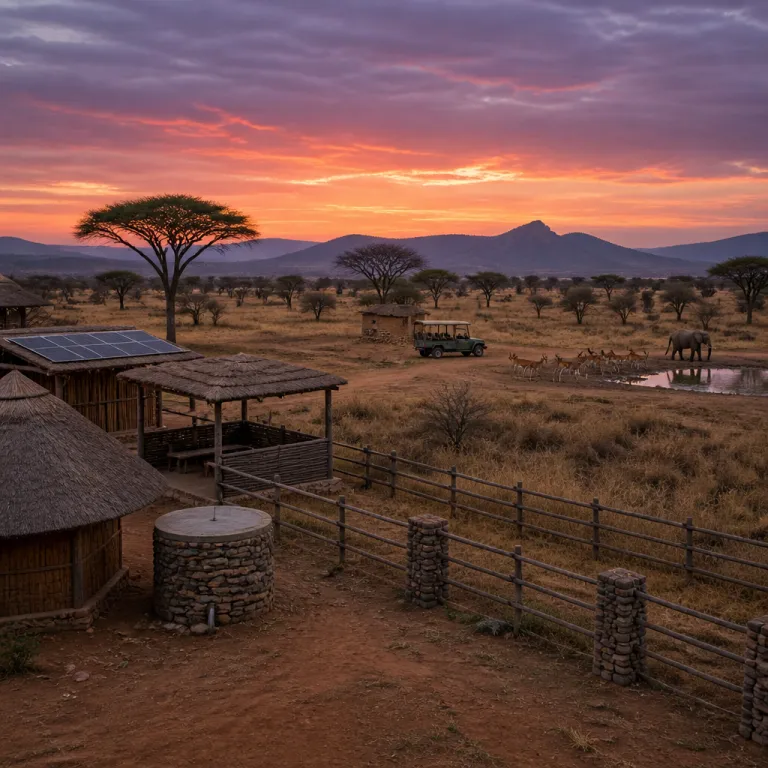
From charity to equity: what a community-owned conservancy safari in Africa really means
Most travellers still book a safari in Africa by scanning wildlife checklists and pool photos. The deeper question, especially in community-owned conservancy safari Africa settings, is who actually owns the land beneath your tent and who controls the wildlife economy. On a modern conservancy safari, that ownership structure quietly determines whether your game drives fund a boardroom in a capital city or school fees for families whose cattle graze these plains.
Traditional conservation models in many national parks ring-fenced wildlife from people and pushed local communities to the margins. Community conservancy structures in Kenya, from the greater Masai Mara to Laikipia, reverse that logic by recognising local communities as landowners and decision makers in conservation. A community conservancy is not a charitable add-on to a safari experience; it is the legal and economic framework that decides who earns, who votes and who sets the rules for wildlife viewing and tourism.
In a classic national park or national reserve, the state owns the land and leases access to tourism operators. In a community-owned conservancy, hundreds or even thousands of people hold title to the land and lease it collectively to carefully vetted private conservancies and camps. That shift turns conservation from an external project into an internal asset, with wildlife and tourism revenues treated as part of a community balance sheet rather than a distant government budget line.
Across Kenya’s conservancies, community agreements and conservation policies now define how private game operators use shared rangelands. These agreements set stocking limits for cattle, cap vehicle numbers for game drives and regulate night drives to protect sensitive species. When you read the fine print of a conservancy safari contract, you see that wildlife, livestock and people are all written into the same management plan rather than competing in separate silos.
Financially, the difference is stark and measurable for local communities living alongside wildlife. In the Mara ecosystem, community conservancies channel an estimated 7.5 million USD in annual income directly to landowners through per-acre lease payments, according to figures reported by the Maasai Mara Wildlife Conservancies Association (MMWCA) in its 2019–2021 summary reports. That predictable income makes wildlife more valuable alive than converted into farmland, which is the fundamental test of any conservation model in Africa’s crowded rangelands.
Governance is where community-owned conservancies move furthest from the old corporate social responsibility playbook. Instead of a tourism company deciding which school to paint, elected community boards decide how to allocate conservation and tourism revenues across education, health and grazing infrastructure. As one MMWCA annual report quotes a Naboisho landowner, “For the first time, the conservancy pays my children’s school fees on time, and I still keep my cows,” capturing both the opportunity and the ongoing balancing act between wildlife and pastoral livelihoods.
The Naboisho model: when the Mara’s wildlife economy pays Maasai landowners first
To understand how ownership reshapes a conservancy safari, look closely at Naboisho Conservancy on the edge of the Masai Mara. Here, more than 600 Maasai landowners have pooled their individual parcels into a single community conservancy and leased it to a small number of safari operators. The wildlife, from lion prides to migrating wildebeest, moves freely with the neighbouring national reserve, but the economics are entirely different from a stay inside the Mara National Reserve itself.
Under the Naboisho model, each landowner is paid a fixed lease rate per acre, regardless of how many guests arrive in a given season. That structure insulates local communities from tourism volatility while giving private operators a strong incentive to maintain high-value, low-volume safaris. It is a deliberate rejection of the mass tourism that still crowds some national parks in Africa, where too many vehicles chase the same sighting and the safari experience feels more like a traffic jam than a wild encounter.
Because Naboisho is a private conservancy under community ownership, it can set stricter rules than the neighbouring national park. Vehicle numbers at sightings are capped, off-road driving is carefully controlled and walking safaris are guided by rangers who often grew up herding cattle on the same hills. Night drives are allowed under tight protocols, giving guests a chance to see nocturnal wildlife without turning the conservancy into a floodlit arena.
The result is a style of wildlife viewing that feels more intimate and less extractive than in many state-run game reserves. You may see fewer vehicles, but you will often see more natural behaviour, from hunting lions to relaxed elephant herds, because the game is not constantly harried. For travellers used to big-brand national parks, this quieter rhythm can feel like a return to an older, more respectful form of safaris.
Critically, the Naboisho structure also changes who sits at the decision-making table for conservation. Community representatives negotiate directly with tourism operators on everything from bed capacity to guide training, using tools such as community agreements and conservancy constitutions to hold partners accountable. Independent assessments by organisations such as the Northern Rangelands Trust and MMWCA note that similar lease-based models can face challenges, including delayed payments in weak tourism years and disputes over grazing access, but they also highlight Naboisho as an example of how transparent contracts and regular community meetings can reduce conflict.
If you want to go deeper into how conservation efforts are reshaping modern safaris, look for independent analyses of conservation-focused safari travel that compare national parks, private reserves and community conservancies. Understanding those distinctions is essential if you want your safari in Kenya or South Africa to support conservation rather than simply consume it.
Women at the helm: how community conservancies are rewriting who guides your safari
Ownership does not only change where the money flows; it changes who gets to lead. In Kenya’s Laikipia region, women now make up roughly a third of wildlife guides, a sharp rise from barely more than a tenth just a few years ago, according to county tourism and conservancy reports compiled between 2018 and 2022. That shift is not accidental; it is the product of community conservancy structures that give local people, and especially women, a formal stake in tourism careers.
When a community conservancy negotiates with private operators, guide recruitment and training often sit alongside lease rates and conservation commitments. Studies of women-led tourism enterprises in East Africa, including research cited by UN Women and regional development agencies in the late 2010s, suggest that they reinvest close to 90 percent of their profits locally, compared with about 35 percent for foreign-owned operations, which makes them powerful engines for inclusive growth. In practical terms, that means more girls in school, more families with diversified income beyond livestock and more role models in the guiding profession for the next generation.
On the ground, you feel this shift during game drives and walking safaris across Kenya’s private conservancies. A woman guide who grew up in the community conservancy may point out not only a leopard in a fever tree but also the medicinal plants her grandmother used along the same path. That layered narrative, where wildlife, culture and land rights are woven together, is one of the quiet luxuries of a community-owned conservancy safari in Africa.
Night drives in these conservancies often pair a professional guide with a community scout who has patrolled the area for years. Together, they read the bush with a fluency that comes from living inside the ecosystem rather than commuting in for a contract. The result is a safari experience that feels less like a staged performance and more like being invited into a working landscape where conservation and daily life intersect.
For travellers trying to choose between a private game reserve and a national park, the key question is not only about crowd levels. It is about whether the people guiding you and serving you have a direct share in the conservancy’s success or are simply employees of a distant holding company. Detailed guides to how your safari spending shapes local outcomes can help you compare destinations before you commit.
As more communities across Africa establish conservancies, from the Mara to northern Kenya and beyond, the guiding profession will continue to diversify. Expect to see more women in senior ranger roles, more local communities represented in lodge management and more cross-training between conservation science and hospitality. That evolution is not a side story to wildlife conservation; it is one of the clearest indicators that the model is working for both people and game.
How to read the fine print: choosing a safari that is truly community owned
For a business traveller tacking three days of safari onto meetings in Nairobi or Johannesburg, the marketing language can blur quickly. Almost every lodge now claims to support local communities and contribute to conservation, especially near famous names such as the Maasai Mara or Kruger National Park. The task is to separate generic corporate social responsibility from genuine community-owned conservancy structures that put land, wildlife and tourism into local hands.
Start by asking who holds the land title in the conservancy or reserve where you plan to stay. If the answer is a government agency, you are in a national park or national reserve, which can still offer superb wildlife viewing but usually does not qualify as a community conservancy. If the answer is a registered group of local landowners who lease their land to operators, you are much closer to a true community-owned conservancy safari in Africa.
Next, look for transparent figures on lease payments, conservation fees and community dividends. Serious conservancies in Kenya’s Mara region, for example, publish per-acre lease rates and total annual payments to landowners, which in some cases reach several million dollars. That level of disclosure is noted in MMWCA’s public briefings and contrasts with many traditional game reserves, where community benefit is often framed as ad hoc donations rather than contractual obligations.
Policy detail matters as much as financial detail when you read a conservancy’s documentation. Ask whether local communities sit on the conservancy board, how often elections are held and how disputes over grazing or wildlife damage are resolved. A robust governance structure, backed by clear conservation policies, is the best safeguard against a private operator treating a community conservancy as just another private game playground.
Travellers who care about conservation should also interrogate how wildlife and people share space in a given conservancy. In many Kenyan conservancies, cattle still graze alongside game under carefully managed systems that keep grasslands healthy and reduce conflict. That coexistence model contrasts with some fenced reserves in South Africa, where wildlife is separated from surrounding communities and the safari experience can feel more like a zoo with sundowners.
Finally, broaden your understanding of wildlife beyond the Big Five by engaging with conservation content before you travel. A detailed explainer on whether gorillas are monkeys or great apes, for example, can sharpen your sense of how different species fit into Africa’s ecosystems and conservation priorities. When you arrive on safari with that level of literacy, you are better equipped to ask informed questions about how your presence supports both wildlife and the people who live with it.
Key figures shaping community-owned conservancies and wildlife safaris
- Community conservancies linked to the greater Masai Mara generate around 7.5 million USD in annual lease income for Maasai landowners, according to the Maasai Mara Wildlife Conservancies Association’s aggregated figures for 2019–2021, which makes wildlife-based tourism a primary revenue stream for many households.
- In Laikipia County in Kenya, women now represent roughly 34 percent of wildlife guides, up from about 12 percent within three years, based on regional guiding association and county tourism data cited in Laikipia conservancy reports, illustrating how community conservancy models can accelerate gender inclusion in the safari workforce.
- Women-led tourism operations in East Africa are estimated to reinvest close to 90 percent of their profits locally, compared with about 35 percent for foreign-owned operations, according to studies referenced by UN Women and regional development programmes, which significantly amplifies the economic impact of each guest night in community conservancies.
- Since the early 2000s, the number of community conservancies in Kenya has grown steadily, as documented by the Kenya Wildlife Conservancies Association and the Northern Rangelands Trust, reflecting rising demand for eco-tourism and more inclusive conservation models that integrate local communities as landowners and partners.
- In one coastal example beyond the savannah, the Wasini Women’s Coral Restoration Group has restored more than 0.8 hectares of reef in just a few years, according to project monitoring reports summarised by Kenyan marine conservation initiatives, showing how community-led conservation can deliver measurable ecological gains alongside tourism income.
Expert insights on community conservancies
What is a community conservancy? In practical terms, it is a protected area where local landowners, often organised through a trust or association, hold legal rights and share responsibility for managing wildlife, grazing and tourism.
How do communities benefit from conservancies? They receive predictable lease payments, employment in guiding and lodge operations, and dedicated conservation fees that fund projects such as schools, clinics and water infrastructure, as documented in annual reports from Kenyan conservancy networks including MMWCA, the Kenya Wildlife Conservancies Association and the Northern Rangelands Trust.
Why is community ownership important in conservation? Practitioners and researchers consistently note that when people living with wildlife have secure land tenure and a direct financial stake in tourism, they are more likely to tolerate wildlife costs, invest in habitat protection and support long-term conservation goals, even though outcomes vary between conservancies and depend on transparent governance, fair contracts and effective conflict resolution.