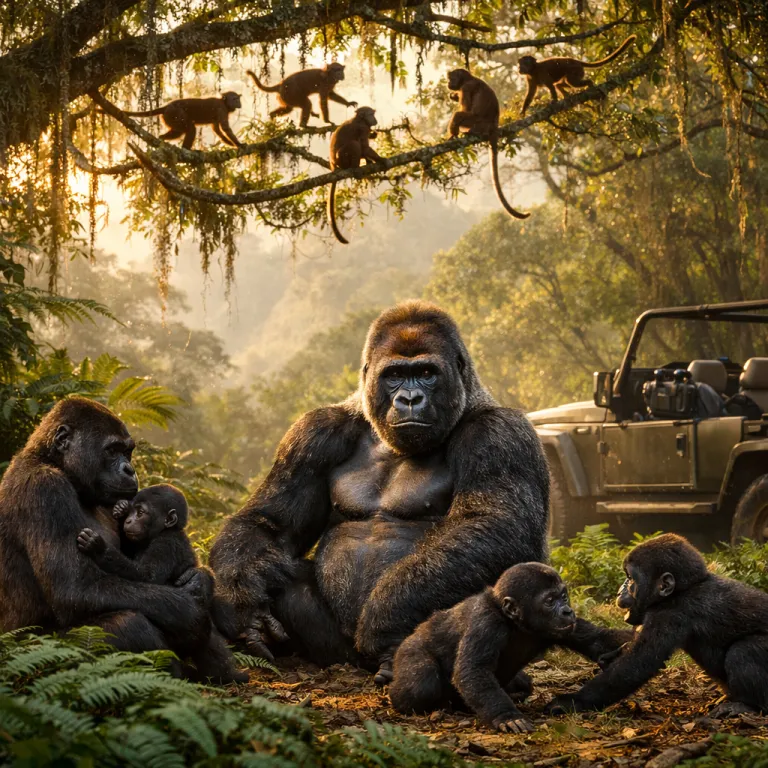
Gorillas on safari: are gorillas monkeys or great apes?
Many first time safari travelers quietly ask themselves, are gorillas monkeys or something else entirely. On a trek through misty forest, that question feels urgent because the gorilla gaze seems almost human and unsettlingly aware. Understanding whether gorillas are monkeys or great apes changes how travelers read every gesture, every sound, and every interaction within the group.
From a taxonomic perspective, gorillas are great apes, not monkeys. Scientists use taxonomic classification, genetic sequencing, and fossil records to show that gorillas share a closer common ancestor with humans than with tail monkeys found in many African savannas. This scientific context matters on safari because it reframes a gorilla encounter as a meeting with close relatives humans rather than a casual sighting of distant wildlife.
Gorillas belong to a small club of great apes that also includes chimpanzees, bonobos, orangutans, and human beings. While monkeys and apes are both primates, apes such as the gorilla lack tails, have larger brains, and show more complex social structure than most monkeys apes. When travelers ask, are gorillas considered monkeys, guides often explain that only two gorilla species exist, compared with more than a hundred monkey species.
On a mountain trail, this distinction becomes tangible. You notice the massive size of a silverback male, the deliberate movements, and the way adult males watch over females and youngsters in the group. Instead of scanning branches for monkeys tails, you focus on ground level paths where gorillas live, feed, and communicate in ways that feel remarkably close to human behavior.
Key differences between gorillas, apes, and monkeys in the wild
To answer clearly whether gorillas are monkeys, travelers need to understand the physical and behavioral differences between apes and monkeys. Gorillas are apes, and every ape shares several traits that separate them from monkeys, even when both species inhabit the same forest. On a guided trek, rangers often begin by pointing out these differences so guests can interpret what they see with confidence.
The most visible distinction is the tail. Monkeys tails are prominent, used for balance, signaling, and sometimes grasping branches, while every ape, including each gorilla, is tailless. When you watch monkeys in groups leaping through the canopy, their tails create a constant flicker of movement, but a gorilla group moves with grounded, deliberate steps. This simple visual cue helps travelers quickly separate monkeys apes during complex sightings.
Size and posture also matter. A fully grown silverback male can reach an impressive size, dwarfing most monkeys and even many other apes. Adult males often sit upright, resting knuckles on the ground, a posture that highlights their powerful chest and shoulders and hints at the shared evolution between humans gorillas. In contrast, many monkey species are lighter, more agile, and rarely display the same imposing presence.
Brain structure and behavior provide deeper clues. Great apes, including gorillas, show advanced problem solving, tool use in some populations, and nuanced social structure that reflects long term bonds. Researchers have even taught some apes basic sign language, demonstrating sophisticated communication abilities that bring them closer to closely humans in cognitive terms. These differences gorillas share with other apes, rather than with monkeys, underpin the scientific answer to the question, are gorillas monkeys.
Gorilla species, habitats, and the reality of mountain trekking
Travelers often hear that only two gorilla species exist, yet the field experience feels far richer. On the ground, guides talk about western lowland gorillas, eastern gorillas, and the particularly famous mountain gorilla that draws visitors to high altitude forests. Each gorilla species occupies distinct habitats, and understanding these environments helps explain how gorillas live and organize their daily routines.
Mountain gorilla trekking typically takes place in a national park where dense vegetation, steep slopes, and cool temperatures shape both gorilla biology and visitor experience. In places such as Bwindi impenetrable forest, rangers cut narrow paths through vines and ferns while tracking fresh nests and dung. The term impenetrable national forest feels accurate when you are pushing through foliage, listening for distant chest beats from male gorillas guarding their families.
Western lowland gorillas inhabit lower, often swampy forests, where visibility is reduced and groups may be harder to follow. Despite these differences, all gorillas live in cohesive groups led by a dominant silverback, whose decisions about feeding sites, rest periods, and movement patterns define the group rhythm. For photographers planning specialist trips, resources such as guides to the best safari tours for photographers capturing Africa's wildlife through the lens help match destinations to specific gorilla species and habitats.
Across these landscapes, the question are gorillas monkeys fades into the background, replaced by a deeper appreciation of their role as great apes. Watching a gorilla group feed quietly on wild celery or bamboo, travelers see how evolution and environment intertwine. The forest becomes a living classroom where the differences gorillas share with other apes, and their similarities with human families, feel immediate and unforgettable.
Social structure, silverbacks, and the lives of male gorillas
Understanding gorilla social structure is essential for anyone asking, are gorillas monkeys, because it reveals how closely humans and gorillas align in family organization. A typical gorilla group centers on one dominant silverback male, several females, and their offspring. Some groups also include subordinate adult males, who may eventually leave to form their own families after several years.
The silverback is more than a powerful body of impressive size. This adult male makes decisions about when the group feeds, rests, or moves, and he intervenes in conflicts with measured force that reflects experience rather than simple aggression. Observing male gorillas manage these responsibilities, many travelers sense a parallel with human leadership roles within extended families.
Young males, sometimes called blackbacks before they develop the characteristic silver hair, test boundaries as they mature. Over the years, they learn social cues, grooming etiquette, and the subtle signals that maintain harmony within the group. These lessons, passed from older ape to younger ape, illustrate how great apes rely on culture as well as instinct, a trait that again separates them from many monkey species.
For visitors, watching a gorilla group interact at close range can be more emotionally affecting than a distant big cat sighting. The way mothers cradle infants, juveniles play in small groups, and the silverback positions himself between potential threats and his family all highlight the deep relatives humans share with these animals. In that moment, the question are gorillas monkeys feels inadequate, replaced by a recognition that humans gorillas share a social complexity that demands respect and careful conservation.
Evolution, biology, and why gorillas are so closely related to humans
From an evolutionary perspective, the answer to are gorillas monkeys is firmly negative, and the reasons are written into gorilla biology. Genetic research shows that gorillas, chimpanzees, and humans share a relatively recent common ancestor compared with monkeys, whose lineage branched away many millions of years ago. This shared ancestry explains why gorillas considered great apes exhibit traits that feel strikingly familiar to human observers.
Fossil records and taxonomic analysis reveal that great apes diverged from monkey lineages years ago, following different evolutionary paths shaped by changing climates and habitats. Over countless years, apes developed larger brains, more flexible shoulders, and complex social structure, while many monkeys retained tails and specialized for agile life in the canopy. These long term differences gorillas share with other apes underpin their classification and guide modern conservation strategies.
In the field, guides sometimes explain evolution in simple terms while trekkers rest on a mountain slope. They describe how gorilla biology, from digestive systems adapted to fibrous vegetation to the immense chest muscles of a silverback, reflects millions of years of adaptation to forest life. When travelers learn that some apes have been taught basic sign language, they begin to grasp how closely humans and great apes align in cognitive potential.
This understanding deepens the emotional impact of a gorilla encounter. Realizing that humans gorillas share a common ancestor encourages visitors to view these animals not as exotic attractions but as vulnerable relatives humans must protect. For those planning broader journeys across the region, tools such as a practical Victoria Falls map for safari travelers and river explorers help integrate primate focused trips into wider itineraries that respect both wildlife and local communities.
Gorilla trekking ethics, photography, and meaningful wildlife encounters
Ethical gorilla trekking begins with acknowledging that gorillas are apes, not monkeys, and that their close relationship to humans demands careful behavior. Park authorities typically limit group size, trekking time, and viewing distance to reduce stress on each gorilla group. These rules may feel strict, yet they protect both gorillas and visitors by minimizing disease transmission and disturbance.
Photographers often arrive eager to capture every detail, from the massive size of a silverback to the delicate fingers of an infant. Responsible guides encourage guests to prioritize the welfare of the ape over the perfect frame, reminding them that great apes share many vulnerabilities with humans, including susceptibility to respiratory illnesses. Resources offering essential wildlife photography safari tips for capturing unforgettable moments help travelers prepare settings and techniques in advance, reducing the need for disruptive movement near the animals.
Respecting the social structure of gorilla groups is equally important. Approaching from behind the silverback, avoiding direct eye contact with nervous individuals, and staying quiet when young gorillas play all help maintain calm. These practices acknowledge that gorillas live according to complex social rules, and that humans entering their space must adapt rather than impose.
Ethical encounters also involve understanding the broader conservation context. Permit fees support national park management, anti poaching patrols, and community projects that provide long term incentives to protect gorillas considered critically endangered in some regions. When travelers leave the forest with thoughtful images and a clearer answer to are gorillas monkeys, they often become advocates for great apes, sharing stories that highlight both the differences gorillas have from monkeys and the deep connections they share with human society.
Planning a gorilla focused safari: practical guidance for travelers
Designing a safari around gorilla encounters requires more preparation than a typical savanna itinerary focused on lions or tail monkeys in open woodland. Travelers should first choose which gorilla species they wish to see, whether the rugged mountain gorilla in high altitude forests or lowland gorillas in flatter, more humid regions. Each option offers different trekking conditions, group dynamics, and photographic opportunities.
In destinations such as Bwindi impenetrable forest, steep trails and dense vegetation demand reasonable fitness and appropriate gear. Lightweight waterproof clothing, sturdy boots, and gloves for gripping vegetation help visitors navigate terrain that truly feels impenetrable national in places. Guides brief guests on how gorillas live in these environments, explaining daily movement patterns, feeding sites, and the role of adult males in selecting safe resting areas.
Time of travel also shapes the experience. Over the years, patterns of rainfall, temperature, and vegetation growth influence how easily rangers can track each gorilla group. Some travelers combine gorilla trekking with classic safaris or river journeys, using regional planning resources to link primate rich forests with other highlights, while always allowing enough days for weather related delays.
Throughout the planning process, it helps to remember that gorillas are great apes whose biology, evolution, and social structure align them more closely humans than with monkeys apes in casual conversation. Asking are gorillas monkeys becomes a starting point for deeper learning rather than a simple classification query. By the time travelers stand a few metres from a silverback male, watching subtle communication that would challenge even advanced sign language, most feel that they are meeting distant relatives humans rather than observing ordinary wildlife.
Key statistics about gorillas, apes, and monkeys
- There are 2 recognized gorilla species, compared with more than 100 monkey species worldwide.
- Gorillas belong to the small group of great apes, which also includes chimpanzees, bonobos, orangutans, and humans.
- Apes, including gorillas, lack tails, while most monkeys have clearly visible tails used for balance and communication.
Questions travelers often ask about gorillas
Are gorillas considered monkeys?
No, gorillas are great apes, not monkeys.
What distinguishes apes from monkeys?
Apes lack tails and have larger brains; monkeys usually have tails.
How many species of gorillas exist?
There are two species: eastern and western gorillas.
Trusted references for further reading
- International Union for Conservation of Nature (IUCN) – great ape conservation assessments
- Dian Fossey Gorilla Fund – field research and gorilla behavior insights
- World Wildlife Fund (WWF) – mountain gorilla ecology and protection programs