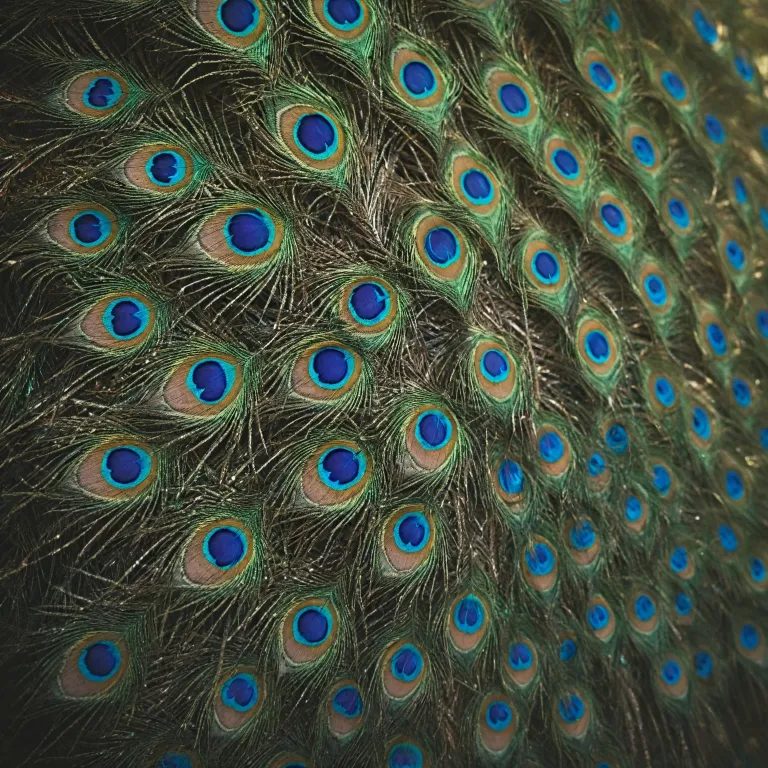
The vibrant world of peafowl feathers: structure, color, and allure
Peafowl feathers captivate with their vibrant colors and intricate patterns, making them a highlight of any safari or wildlife adventure. The peacock, or male peafowl, is especially renowned for its elongated tail feathers, which can reach up to 150 centimeters and constitute about 60 percent of its body length. These feathers display a remarkable range of hues, from deep blue and green to iridescent purples and golds, thanks to a phenomenon called structural coloration. Unlike pigmentation, this effect is achieved through microscopic barbules that refract light, creating the signature shimmer seen in both peacock feathers and peafowl plumage. The peacock train, adorned with eye-like patterns, is not only a visual marvel but also a key element in courtship displays, attracting the more subtly colored peahen. The natural peacock feather, with its wispy feather edges and vibrant colors, is a symbol of beauty and immortality in many cultures across India, Sri Lanka, and Southeast Asia. Whether you are observing peafowl in their native habitat or admiring a collection of feathers peafowl, the artistry of their plumage is undeniable. The blue green tones and the distinctive peacock eye pattern make each feather a unique specimen, with sizes ranging from small peahen feathers to the grand tail eyes of the peacock train. For those interested in the science behind these colors, structural coloration offers a fascinating insight into how nature creates such vivid displays without relying on dyes or pigments.
Peafowl feathers in safari adventures: observation, collection, and ethical considerations
Encountering peafowl in the wild is a highlight for many safari enthusiasts, especially in the wildlife sanctuaries of India and Sri Lanka. Observing the peacock’s courtship display, where it fans out its tail feathers to reveal a cascade of blue, green, and gold, is a spectacle that draws visitors from around the world. The peafowl plumage, especially the peacock tail, is often sought after for its aesthetic and cultural value. However, ethical considerations are paramount when it comes to collecting feathers. Peafowl naturally shed their train feathers annually during the molting season, providing an opportunity to collect natural peacock feathers without harming the birds. It is important to respect local wildlife regulations and avoid disturbing the animals or their habitat. The price of peafowl feathers can vary depending on the size, quality, and origin, with larger peacock feathers and those with prominent eye patterns commanding a higher price. For collectors, understanding the range inches of available feathers and the number of pcs peacock in a set is essential for making an informed choice. When purchasing feathers, especially from the united states or other regions, verifying that they are ethically sourced ensures that your money supports sustainable practices. For more information on responsible wildlife tourism and ethical feather collection, visit this comprehensive guide to ethical wildlife encounters. The allure of peafowl feathers lies not only in their beauty but also in the story they tell about the natural world and our responsibility to protect it.
The economic and cultural value of peafowl feathers: price, trade, and symbolism
Peafowl feathers have long held significant economic and cultural value, both in their native regions and internationally. The price of peacock feathers varies widely, with factors such as feather sizes, the number of pcs, and the presence of distinctive features like the peacock eye or tail eyes influencing their market value. In the united states, demand for natural peacock feathers and peahen feathers spans decorative arts, fashion, and ceremonial uses. The vibrant colors and unique patterns of feathers peacock make them a popular choice for adding elegance to home décor, costumes, and even holiday decorations like the christmas tree. The trade in peafowl feathers is regulated in many countries to ensure that it does not negatively impact wild populations. Buyers are encouraged to read product descriptions carefully and to choose suppliers who prioritize ethical sourcing. The symbolism of peafowl feathers extends beyond their monetary worth; in many cultures, they represent immortality, beauty, and spiritual awakening. The peacock feather, with its blue green hues and intricate eye pattern, is often used in religious ceremonies and as a talisman for good fortune. For those interested in the broader implications of feather trade and cultural symbolism, this article on the global impact of wildlife trade provides valuable insights. The economic and cultural significance of peafowl feathers underscores the importance of sustainable practices and respect for the species.
Peafowl feather anatomy: from wispy feather to peacock train
The anatomy of peafowl feathers is a marvel of natural engineering, contributing to both their visual appeal and functional role in the bird’s life. Each feather consists of a central shaft, or rachis, from which barbs and barbules extend to create the feather’s surface. The wispy feather edges found on some peahen feathers contrast with the robust structure of the peacock train, which features elongated tail feathers adorned with eye-like patterns. These tail eyes are not merely decorative; they play a crucial role in mating rituals, as the peacock fans its train to display the full array of vibrant colors and patterns. The range inches of peafowl feathers can vary significantly, with some peacock feathers reaching lengths of over 150 centimeters. Feather sizes are an important consideration for collectors and artisans, as larger feathers are often more desirable for decorative purposes. The natural peacock feather is distinguished by its iridescent blue and green hues, created by the microscopic structure of the barbules. The peacock train, composed of multiple pcs peacock feathers, is a testament to the evolutionary pressures of sexual selection, where only the most impressive displays attract the attention of peahens. For those interested in the scientific aspects of feather anatomy, the study of structural coloration offers a window into the complex interplay between biology and physics. The peafowl’s plumage is not only a symbol of beauty but also a functional adaptation honed by millions of years of evolution.
Peafowl feathers in art, design, and biomimicry
The influence of peafowl feathers extends far beyond the natural world, inspiring artists, designers, and scientists alike. The vibrant colors and intricate patterns of peacock feathers have been incorporated into textiles, jewelry, and visual arts for centuries. In contemporary design, the blue green hues and eye motifs of peafowl plumage are used to add a touch of elegance and exoticism to a wide range of products. The natural peacock feather is a popular choice for embellishing costumes, accessories, and even the christmas tree during festive seasons. Beyond aesthetics, the structural coloration of peafowl feathers has inspired innovations in materials science and biomimicry. Researchers study the microscopic structures responsible for the feathers’ iridescence to develop new materials with similar optical properties. This intersection of art and science highlights the enduring appeal of peafowl feathers and their potential to drive technological advancements. The legacy of peafowl feathers in art and innovation is a testament to their timeless beauty and versatility.
Practical tips for identifying, selecting, and caring for peafowl feathers
For collectors and enthusiasts, understanding how to identify and care for peafowl feathers is essential to preserving their beauty and value. When selecting feathers, consider the feather sizes, the presence of vibrant colors, and the condition of the peacock eye or tail eyes. The price of feathers can be influenced by these factors, as well as the number of pcs in a set and whether the feathers are sourced from natural molting. To ensure authenticity, look for natural peacock feathers with intact barbules and a rich blue green sheen. Proper storage is crucial to maintaining the integrity of feathers peafowl; keep them in a dry, cool environment away from direct sunlight to prevent fading and brittleness. Cleaning should be done gently with a soft brush or cloth to remove dust without damaging the delicate structure. For those interested in using peafowl feathers in crafts or décor, the choice of feather sizes and colors can add a unique touch to any project. Whether you are adding a peacock feather to a centerpiece or incorporating peahen feathers into a design, the possibilities are endless. As you explore the world of peafowl plumage, remember the importance of ethical sourcing and respect for the species. "The vibrant colors of peacock feathers are due to structural coloration, where microscopic structures in the feathers refract light to produce iridescent hues." "Yes, peacocks shed their train feathers annually during the molting season." "The 'eye' patterns on peacock feathers are used in courtship displays to attract peahens." These insights highlight the remarkable qualities of peafowl feathers and their enduring appeal.
Key statistics on peafowl feathers and their significance
- Length of peacock's train: 150 cm
- Percentage of body length constituted by train: 60%
Frequently asked questions about peafowl feathers
Why are peacock feathers so colorful?
The vibrant colors of peacock feathers are due to structural coloration, where microscopic structures in the feathers refract light to produce iridescent hues.
Do peacocks shed their feathers?
Yes, peacocks shed their train feathers annually during the molting season.
What is the purpose of the 'eye' patterns on peacock feathers?
The 'eye' patterns on peacock feathers are used in courtship displays to attract peahens.