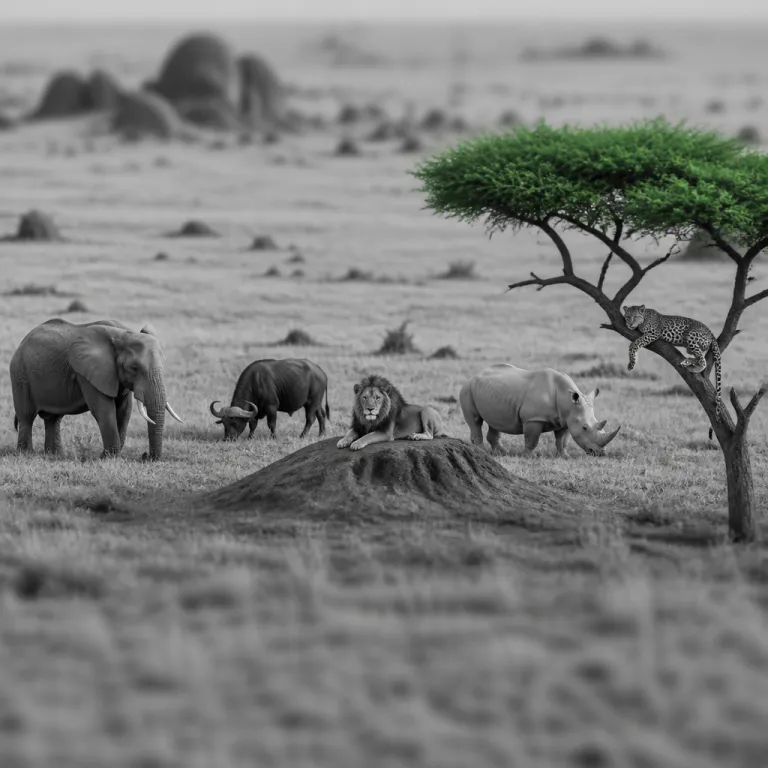
Why the safari Big Five in Kenya still defines the African savannah
Kenya remains one of Africa’s most compelling destinations for a safari Big Five Kenya journey. On these plains you meet the five animals that shaped early hunting lore and now anchor modern conservation ethics. A well-planned itinerary lets you observe lions, leopards, elephants, buffalo and rhinoceros as living symbols of wild Africa.
The term Big Five once referred to the most challenging species for on-foot hunting, yet today it frames a more thoughtful style of wildlife travel. Guides now use the phrase Big Five to explain how predators and large herbivores structure entire ecosystems, from the smallest insects to the largest plains game. When you watch a lion–leopard interaction over a carcass or see a black rhinoceros browsing in dense thicket, you witness how power, vulnerability and survival intersect in real time, even though such close encounters between these cats are relatively rare.
Kenya’s national parks and every national reserve that protects these animals form a connected network of habitats. From the open grasslands of the Maasai Mara to the wooded hills of Laikipia and the swamps of Amboseli National Park, each landscape supports different species and behaviours. Planning a safari Big Five experience in Kenya means understanding where large numbers of each animal live, which predators dominate, and how conservation projects shape your time in the bush.
Masai Mara and Mara National Reserve: heartland of lions and river crossings
The Masai Mara National Reserve, often shortened to the Mara, is Kenya’s most famous stage for the Big Five. Here, lions patrol golden grasslands, leopards melt into acacia shadows, and African buffalo herds churn the soil into dust. During the Great Migration season, large numbers of wildebeest and other plains game pour in from neighbouring African countries, turning every day into a moving wildlife documentary.
Along the Mara River, dramatic river crossings reveal the raw tension between prey and predators. Crocodiles wait in the currents while lions and occasionally a stealthy leopard position themselves on the banks, hoping to catch exhausted animals. One guide described it simply: “You can feel the ground shake before you even see the first wildebeest.” These scenes can be intense, yet they illustrate why conservation of both predators and migratory species is essential for the long-term health of the ecosystem.
Game drives in the Mara National Reserve often start before sunrise, when big cats are still active and temperatures are gentle. Skilled guides read tracks, alarm calls and vulture movements to locate the five animals that most visitors hope to see. For travellers curious about what happens after dusk, detailed guidance on where night drives are permitted and what nocturnal predators you may encounter helps you extend your Big Five safari in Kenya into the dark.
Choosing between Kenya and other African countries for Big Five safaris
Many travellers compare Kenya with South Africa and other African countries when planning a Big Five focused trip. Kenya offers vast open landscapes, classic Maasai Mara scenes and a strong emphasis on community-based conservation, while South Africa excels at fenced national parks with dense populations of the five animals. Your decision should balance wildlife density, style of guiding, travel logistics and the type of national park or private reserve experience you prefer.
In Kenya, the safari Big Five Kenya circuit usually links the Maasai Mara, Amboseli, Tsavo and Laikipia conservancies, with each area adding different species and scenery. South Africa often combines Kruger National Park with nearby private reserves, where off-road game drives increase chances of close leopard and black rhinoceros sightings. To compare these options in depth, consult this analysis of which African country offers the most rewarding safari journey for your style of travel.
Kenya itineraries tend to feel wilder, with fewer fences and more natural movement of animals across borders. South Africa’s national parks, by contrast, often provide easier logistics for first-time visitors and families, with shorter transfer times and a wide range of lodges. Both destinations support serious conservation work for lions, leopards, buffalo and rhinoceros, so your choice ultimately shapes the rhythm, comfort level and photographic focus of your Big Five adventure.
Best time of year for Big Five sightings in Kenya
Kenya’s wildlife viewing is possible year-round, yet the best time for a safari Big Five Kenya itinerary depends on your priorities. The long dry season from roughly July to October concentrates animals around water sources, making lions, leopards and buffalo easier to find. During this period, the Great Migration usually reaches the Maasai Mara, and river crossings along the Mara River become a central spectacle.
Travelling in February offers a different but equally rewarding perspective on the Big Five. Calving season for many plains game species peaks around this month, drawing predators such as lions and leopards to the nurseries of newborn animals. Photographers often favour this time because clear skies, short grass and young animals create striking images, while the risk of heavy rain remains relatively low.
The so-called green season, spanning parts of the wet months, brings lush landscapes and fewer vehicles on game drives. Elephant families, African buffalo herds and both white and black rhinoceros often thrive in these conditions, with abundant browse and water across national parks and each national reserve. If you value solitude, birdlife and dramatic skies more than constant big cat action, this quieter time can suit your style of safari.
From hunting history to modern conservation of the Big Five
The phrase Big Five emerged from a period when trophy hunting dominated European and American narratives about Africa. Hunters considered lion, leopard, buffalo, elephant and rhinoceros the most dangerous species to pursue on foot, and their stories shaped early safari mythology. Today, Kenya’s tourism model has shifted decisively toward photographic safaris, using the same five animals as ambassadors for conservation rather than targets.
Modern guides explain how predators such as lions and leopards regulate herbivore numbers, preventing overgrazing and protecting vegetation. African buffalo herds aerate soil and open pathways to water, while elephants and both white and black rhinoceros shape vegetation structure through browsing and grazing. This ecological perspective helps travellers understand that a safari Big Five Kenya experience is not only about ticking species off a list, but about seeing how life, death and renewal maintain balance in the savannah.
Kenya Wildlife Service data from around 2021 indicate roughly 2,500 lions, 2,000 leopards, 80,000 buffalo and about 1,000 rhinoceros within the country’s borders, figures that highlight both success and vulnerability. These large numbers for buffalo contrast with the fragile status of the black rhinoceros, whose population remains under constant threat from poaching. The rhino total combines both black and white rhinoceros, and the latest detailed figures are available through Kenya Wildlife Service reports and official updates. When you choose operators who support anti-poaching units and community projects, your game drives directly contribute to the long-term survival of the Big Five across Kenya’s national parks and reserves.
Designing an ethical safari Big Five Kenya itinerary
Thoughtful planning turns a simple holiday into a meaningful safari Big Five Kenya journey. Start by selecting locally rooted operators who partner with conservation organisations and Maasai communities around the Maasai Mara and other key landscapes. Ask how your fees support anti-poaching patrols, habitat restoration and education programmes that reduce pressure on wildlife and natural resources.
On the ground, insist on respectful distances from animals during game drives, especially when viewing predators on a kill or a resting black rhinoceros. Guides should position vehicles so that lions, leopards and other species can move freely, without feeling surrounded or harassed by large numbers of vehicles. Ethical practice also means limiting engine noise, avoiding off-road driving in sensitive areas and never encouraging behaviour that alters natural interactions between lion–leopard rivals or other predators.
To deepen your understanding of interconnected ecosystems, consider combining your Kenya itinerary with a marine extension. An in-depth feature on immersive marine adventures in the Coral Triangle shows how ocean conservation mirrors the challenges faced by savannah national parks. Whether you are watching river crossings in the Mara National Reserve or coral spawning on a distant reef, the same principles of respect, restraint and long-term thinking apply to every responsible wildlife journey.
Key statistics and conservation insights for Kenya’s Big Five
- Kenya hosts an estimated 2,500 lions, a figure reported by Kenya Wildlife Service in 2021, which underscores the country’s regional importance for big cat conservation compared with many neighbouring African countries.
- Leopard numbers in Kenya are estimated at around 2,000 individuals according to Kenya Wildlife Service (2021), reflecting the species’ elusive nature and the need for careful monitoring across national parks and each national reserve.
- Buffalo populations reach roughly 80,000 animals nationwide, based on 2021 Kenya Wildlife Service data, meaning African buffalo herds remain one of the most secure components of the Big Five in Kenya.
- Elephants number about 36,000 individuals in Kenya, as reported by Kenya Wildlife Service in 2021, a recovery that highlights the impact of stronger anti-poaching measures and community engagement around key national parks.
- Rhinoceros populations stand at approximately 1,000 animals in Kenya, combining both black and white rhino according to Kenya Wildlife Service’s 2021 reporting. The black rhinoceros is still classified as critically endangered, which makes every responsible Big Five safari in Kenya a potential contribution to long-term conservation funding.
FAQ about the safari Big Five in Kenya
What are the Big Five animals on safari in Kenya ?
The Big Five animals are lion, leopard, elephant, buffalo and rhinoceros, a group originally defined by trophy hunting difficulty but now central to conservation-focused safaris. In Kenya, you can see these five animals in several national parks and each major national reserve. The Maasai Mara, Amboseli, Tsavo and Laikipia conservancies are among the most reliable areas for a safari Big Five Kenya itinerary.
Where can I see the Big Five in Kenya during one trip ?
Most travellers combine the Masai Mara National Reserve with at least one other ecosystem such as Amboseli National Park or a Laikipia conservancy. This mix increases your chances of seeing all five animals, from lions and leopards to both white and black rhinoceros. Kenya Wildlife Service notes that Masai Mara, Amboseli, Tsavo and Laikipia together hold significant populations of every Big Five species.
When is the best time for a Big Five safari in Kenya ?
The prime period for concentrated sightings runs through the main dry season, when vegetation is short and water sources draw large numbers of animals. Kenya Wildlife Service guidance summarises it clearly: "When is the best time for a Big Five safari? Dry season: July-October." Travelling in February can also be excellent, especially for predator action around newborn plains game.
Are Big Five safaris in Kenya safe for first time visitors ?
Safaris in Kenya are considered safe when you travel with experienced guides and follow their instructions closely. Vehicles are designed for stability and visibility during game drives, and reputable operators maintain strict safety protocols around predators and large herbivores. Kenya Wildlife Service emphasises that Big Five safaris are safe with qualified guides who respect distance and animal behaviour.
How can I support conservation during my Big Five safari in Kenya ?
You can support conservation by choosing eco-conscious operators, staying in camps that fund anti-poaching units and contributing to community projects near national parks. Kenya Wildlife Service and local NGOs encourage visitors to respect wildlife, avoid littering and never purchase products made from animal parts. As one official guideline states: "How can I support conservation during my safari? Choose eco-friendly operators, respect wildlife."