The Kalahari desert lion in context: where Africa’s dry heart still roars
Across the vast Kalahari Desert, a particular lion has learned to live where rain is rare and shade is precious. This Kalahari desert lion population ranges across Botswana, Namibia, and South Africa, moving through red dunes, fossil riverbeds, and sparse grasslands in search of prey. In this arid corner of Africa, lions cover home ranges that can exceed 2,100 km², because food and water are scattered over immense distances, according to long-term monitoring by the Kalahari Lion Research Project (Funston 2010; Funston & Mills 2006).
These Kalahari lions are apex predators, yet every hunt is shaped by heat, sand, and silence. Researchers describe them as a distinct ecological form of African lion, adapted to a desert where temperatures soar by day and plunge at night, and where a single water hole can dictate the movements of entire prides. Their survival strategy blends efficient water use, hunting in small groups, and a remarkable tolerance for the light Kalahari sun that bleaches the dunes but still leaves enough cover for an ambush.
For safari travellers, the idea of meeting a lion Panthera in such a stark landscape is compelling, because it contrasts sharply with the greener savannahs of East Africa. You are not just watching lions; you are watching Panthera leo push the limits of what a big cat can endure, often walking many kilometres between scattered shade trees and the next water hole. Every sighting of a Kalahari lion feels earned, and every set of fresh tracks in the sand tells a story of movement, risk, and resilience.
Physical adaptations of the Kalahari lion: from black manes to lean frames
The typical Kalahari desert lion looks different from many lions in wetter regions, starting with its build. Males often appear leaner than their counterparts in the south of Africa, yet an average male African lion here still weighs roughly 180–190 kg and females about 120–130 kg, based on regional summaries and field measurements reported by the Kalahari Lion Research Project and collated in Funston (2010). That lighter frame, combined with powerful leg muscles and large paws, helps lions move efficiently across soft sand and cover long distances between prey herds.
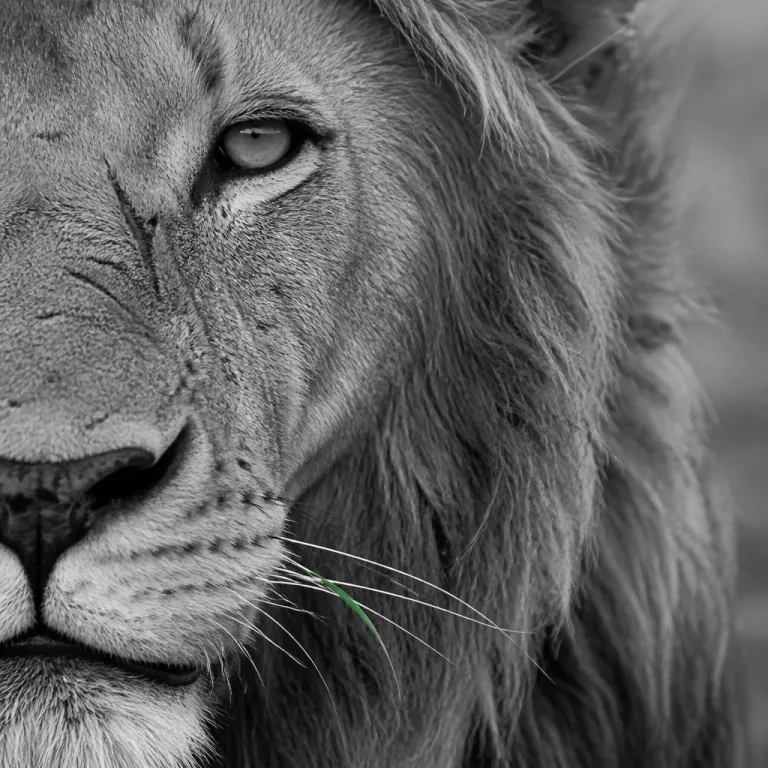
One of the most striking features of a mature Kalahari lion is the dark, sometimes black-maned collar that frames the head and shoulders. In the soft evening light, Kalahari males with a full black mane can look almost unreal, especially when you see a single young male stepping onto a dune crest with the sun behind him. Photographers prize these moments because the contrast between the pale desert and the dark mane creates dramatic pictures that work well for both personal portfolios and editorial spreads.
Facial structure also matters for wildlife photography, because the angular cheeks and intense eyes of a male African lion in the Kalahari create a powerful portrait. When you frame a close portrait of Panthera leo in this region, the sparse background and clean horizon line mean every whisker and scar stands out in high-resolution images. If you are planning a trip that includes more traditional savannah destinations in East Africa, where open grasslands dominate, reading about how landscapes shape lion appearances in comparative safari guides can help you appreciate how unique the Kalahari lion really is.
Behaviour, hunting, and life around the water hole
Behaviourally, the Kalahari desert lion has adapted to a world where water is scarce and prey is wary. These lions often rest through the hottest hours, then begin to move as the evening light softens and temperatures fall, using the long twilight to travel and hunt. Their methods rely on keen eyesight, sharp claws, and powerful jaws, but also on patience, because desert-adapted antelope and wildebeest are spread thinly across the Kalahari.
Diet here reflects the ecosystem’s limits, and researchers summarise it clearly in one verified statement: “What do Kalahari lions eat? They hunt antelope, wildebeest, and other desert-adapted prey.” Another key adaptation is water use, and scientists emphasise this with a second crucial observation: “How do Kalahari lions survive without water? They obtain moisture from prey and adapt to arid conditions.” These concise answers underline how every successful hunt is both a meal and a drink for Panthera leo, especially for a nursing lioness or a growing young male.
Life often centres on the few permanent water holes scattered across the Kalahari Desert, where herbivores gather and predators wait. A lion Kalahari pride may lie in the shade of camelthorn trees through the day, then approach the water hole cautiously as dusk falls, using the shifting light and fine Kalahari dust to stay hidden. If you are planning broader African wildlife journeys, including countries beyond Botswana and South Africa, resources that outline refined journeys through the best countries in Africa to visit for unforgettable safaris can help you combine Kalahari lion encounters with other ecosystems, from wetlands to mountain forests.
Photographing the Kalahari desert lion: light, composition, and ethical practice
For photographers, the Kalahari desert lion offers some of the most atmospheric wildlife images on the continent. The desert acts as a giant reflector, bouncing warm tones onto the flanks of lions as they move across dunes or rest near a water hole. When the evening light stretches shadows and turns the sand copper red, a single male African lion walking along a ridge can yield pictures that feel almost cinematic.
To capture compelling photos, think carefully about how you frame both the lion and the landscape, because the Kalahari itself is part of the story. Wide-angle images that place a small Panthera figure against a vast sky convey the scale of this African desert, while tighter portrait compositions emphasise the intensity of the eyes and the texture of a black-maned mane. Many travellers aim to return with free photos for personal albums, yet the same lion photographs can later be curated as stock pictures or higher-value editorial images, depending on how they are processed, captioned, and shared.
Ethics matter as much as aesthetics, and a responsible guide will always maintain distance so that lions remain relaxed. You should never pressure a driver to edge closer for lion shots, because stress can alter behaviour and even disrupt hunting attempts. If you are interested in how other animals adapt physically to harsh environments, a detailed article on tarantula anatomy, structure, function, and adaptation offers a useful comparison, showing how both spiders and Panthera leo evolve specialised traits to survive in extreme habitats.
Planning a safari to meet the Kalahari lion in Botswana and South Africa
Planning a safari focused on the Kalahari desert lion requires more preparation than a classic savannah trip. Distances are long, roads can be sandy, and temperatures swing sharply between day and night, so travelling with an experienced operator is strongly recommended. Most visitors access Kalahari lion territories through protected areas in Botswana and South Africa, where regulated tourism supports conservation and offers structured wildlife viewing.
In Botswana, the Central Kalahari Game Reserve and adjacent private concessions provide some of the best opportunities to see a black-maned male at close range. These areas are remote, and a single young male may patrol a territory that stretches across hundreds of square kilometres, so sightings often involve tracking fresh prints and listening for distant roars at night. In South Africa, the Kgalagadi Transfrontier Park straddles the border with Botswana, giving travellers a chance to photograph Panthera leo as they move between dunes, dry riverbeds, and occasional water holes that attract gemsbok, springbok, and wildebeest.
When choosing where to stay, prioritise operators that limit vehicle numbers at sightings and respect viewing distances for lions and other wildlife. Ask how guides handle crowded sightings, whether they rotate vehicles to give everyone a chance at images, and how they manage artificial light on night drives so that the evening light remains as natural as possible. Responsible planning ensures that your own pictures of the Kalahari lion contribute to a sustainable safari model, rather than adding pressure to already stressed ecosystems.
Conservation, human–wildlife conflict, and why Kalahari lions matter
The long-term future of the Kalahari desert lion depends on how well people manage land, livestock, and tourism across this shared landscape. While Kalahari lions are not currently classified as a separate endangered unit, they form part of the broader African lion population, which the IUCN Red List assesses as Vulnerable (Bauer et al. 2016), and they face real threats from habitat loss, expanding settlements, and conflict with farmers who lose cattle or goats to roaming lions. In some areas, fences and fragmented grazing lands make it harder for Panthera leo to follow migratory prey, increasing the risk of livestock predation and retaliatory killings.
Conservation programmes in Botswana, Namibia, and South Africa aim to sustain lion populations by protecting core habitats, supporting community-based tourism, and compensating farmers for verified livestock losses. Recent regional assessments suggest that only a few thousand lions persist across southern Africa’s arid and semi-arid zones, with Kalahari subpopulations numbering in the low hundreds, underscoring how local declines can quickly affect overall viability. These efforts help maintain ecological balance, because lions regulate herbivore numbers and influence how other predators use the landscape, from cheetahs to brown hyenas. As one research summary notes in a third key statement: “Are Kalahari lions endangered? They face threats but are not classified as endangered.”
For travellers, choosing operators that invest in local communities and support research is one of the most effective ways to help. When you pay park fees, stay in responsible camps, and purchase licensed stock pictures or curated lion image collections from ethical photographers, you contribute directly to the financial value of living lions. Over time, that value can shift perceptions, turning a young male lion from a perceived threat into a recognised asset that supports jobs, education, and long-term wildlife protection across the Kalahari Desert.
Key statistics about the Kalahari desert lion
- Average male African lion weight in the Kalahari is about 180–190 kg, while females average around 120–130 kg, according to regional data reported by the Kalahari Lion Research Project and summarised in Funston (2010), which reflects a lean but powerful build suited to long-distance movement in soft sand.
- Typical home range size for a Kalahari lion pride can reach approximately 2,100 km², based on Kalahari Lion Research Project estimates (Funston & Mills 2006), highlighting how far lions must travel to locate prey and occasional water holes in this desert ecosystem.
- The Kalahari Desert spans parts of Botswana, Namibia, and South Africa around 23° south and 22° east, placing Kalahari desert lion populations in one of the largest continuous arid landscapes in Africa.
- Tourism guidelines recommend visiting during the cooler months of the dry season, when daytime temperatures are more manageable and lions are often more active in the morning and late afternoon, improving chances for high-quality images.
- Conservation assessments currently indicate that Kalahari lions face ongoing threats from human–wildlife conflict and habitat loss but are not yet listed as a distinct endangered population, which underscores the importance of proactive protection rather than emergency rescue.
FAQ about the Kalahari desert lion
What do Kalahari lions eat on a typical hunt?
Kalahari lions primarily hunt desert-adapted antelope such as springbok and gemsbok, along with wildebeest and occasionally smaller mammals when larger prey is scarce. These prey species provide both energy and essential moisture, allowing Panthera leo to survive long periods without drinking at a water hole. Scavenging also occurs, but active hunting remains the main strategy for securing food in the Kalahari Desert.
How do Kalahari lions survive with so little water?
Most of the moisture a Kalahari desert lion needs comes from the blood and body fluids of its prey, which reduces dependence on permanent water sources. Physiological adaptations help lions conserve water, including efficient kidneys and the ability to withstand mild dehydration between hunts. When water holes are available, lions will drink, but their survival does not depend on daily access to open water.
Where can travellers see Kalahari lions in the wild?
Travellers can see Kalahari lions in protected areas such as the Central Kalahari Game Reserve in Botswana and the Kgalagadi Transfrontier Park shared by Botswana and South Africa. These parks protect large tracts of desert habitat where Panthera leo still roams freely across dunes and fossil riverbeds. Guided safaris in these regions offer the safest and most responsible way to observe lions and other wildlife.
Are Kalahari lions a different species from other African lions?
Kalahari lions belong to the same species, Panthera leo, as other African lions found across the continent. They are considered a distinct ecological population because they have adapted behaviourally and physiologically to the arid conditions of the Kalahari Desert. Differences in body condition, mane colour, and ranging patterns reflect environmental pressures rather than a separate species status.
What is the best time of day to photograph Kalahari lions?
The most rewarding time to photograph a Kalahari desert lion is usually during the early morning and late afternoon, when the light Kalahari sun is softer and temperatures are cooler. At these times, lions are more likely to move, interact, and visit water holes, creating dynamic scenes for both wide landscape images and intimate portrait photos. Midday sightings still occur, but harsh overhead light and resting behaviour make compelling photography more challenging.