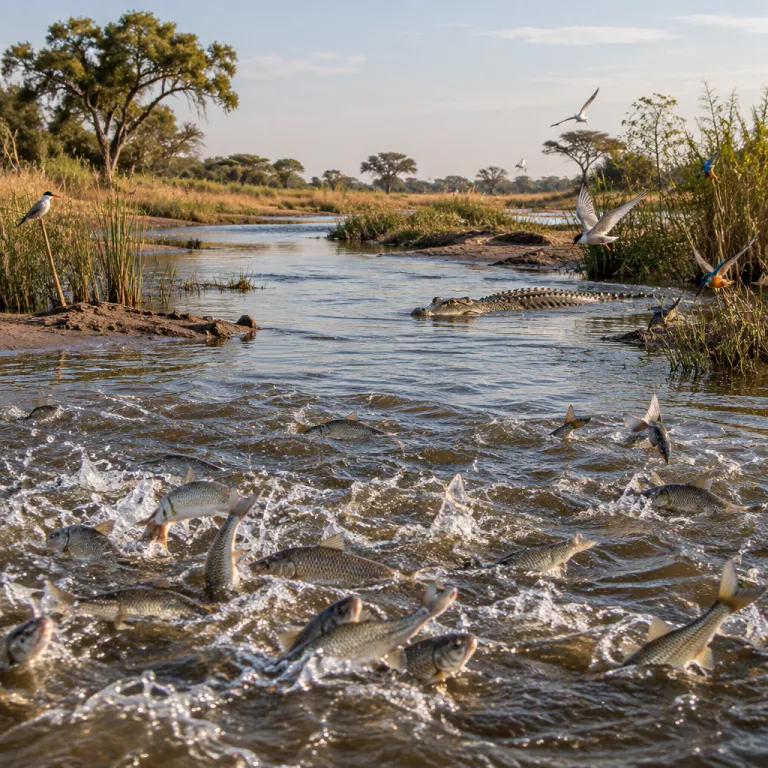
The barbel run as a wildlife spectacle, not just a fishing event
The seasonal barbel run on the Okavango River is one of Africa’s most dramatic freshwater wildlife events. When conditions align, countless African sharptooth catfish (Clarias gariepinus, commonly called barbel) surge upstream and transform quiet channels into a churning corridor of fish, birds, and predators that every serious safari and wildlife photography enthusiast should witness. For anglers and photographers alike, this intense movement of fish through open water creates a rare overlap between a fishing safari and a big game wildlife experience.
During a strong run, the river seems to boil as barbel feed aggressively along the riverbed and against papyrus fringes. The sudden change in water flow concentrates baitfish, and the catfish will herd these shoals into tight balls that attract tigerfish and a frenzy of birds. On a good day, you can watch the feeding behavior unfold in layers, from the dark shapes of barbel below to the explosive strikes of tigerfish and the aerial dives of African fish eagles above.
For photographers, this is not only about how to catch barbel or how many fish are landed in a week. The barbel run becomes a living backdrop for wildlife images that show the full Okavango ecosystem in motion, from the Okavango Panhandle down toward the Okavango Delta. A carefully planned fishing safari here lets you move with the flow of the river, using each day and each stretch of water to frame new compositions of catfish, tigerfish, and birds in the same frame.
Where the barbel run happens in the Okavango system
The most reliable barbel run action usually starts in the Okavango Panhandle, the deep northern section of the Okavango River before it fans into the delta. Here, the channel is wide, the water is relatively deep, and the riverbed offers ideal structure where catfish feed and where baitfish can shelter until the pressure of predators builds. As the seasonal flood pulse moves, the barbel will track the changing flow, and anglers who understand this rhythm can position themselves for exceptional sessions.
Further downstream, the Okavango Delta’s maze of channels and lagoons creates more complex habitats for both barbel and tigerfish. In some years, the strongest activity remains in the Panhandle, while in other years it pushes deeper into the delta’s main arteries, where open water meets reed beds and submerged tree roots. A knowledgeable fishing safari guide will read the water level, clarity, and flow to decide which stretch of the Okavango River offers the best chance to catch barbel and to photograph the full predator chain, from barbel–tigerfish interactions to opportunistic catfish and birds.
Wildlife photographers planning a barbel run trip should think like both anglers and naturalists. Study recent river flow data from sources such as the Permanent Okavango River Basin Water Commission (OKACOM), speak with lodges that specialize in barbel fishing in the Panhandle (for example, camps near Shakawe and Sepopa), and ask how many days of consistent feeding activity they have seen in the current season. For a deeper understanding of how photographic priorities shape safari planning, it is worth reading this analysis of how photography is reshaping where lodges build and what guides prioritise, then applying those lessons to the Okavango barbel phenomenon.
Reading the water: timing, flow, and behavior during a barbel run
Success during a barbel run depends on understanding how water levels and flow dictate fish behavior. When the river rises and begins to spill into floodplains, baitfish move with the new water, and barbel will follow, turning narrow channels into migration routes. As the flow stabilizes, catfish feed more predictably along drop-offs and current seams, giving both fly fishers and conventional anglers clear targets.
On a typical fishing safari focused on the Okavango barbel run, guides plan each day around the intersection of light, flow, and fish movement. Early in the morning, when the water is cooler and the sun is low, anglers often work the edges of the main channel, casting bait or fly patterns tight to structure where barbel rest before pushing into faster water. Later in the day, as the current strengthens, the catfish will often herd baitfish into open water, and this is when tigerfish join the action with explosive surface strikes that make for dramatic photographs.
Photographers should treat each week on the Okavango River as a dynamic assignment rather than a fixed schedule. Some days, the best images come from low-angle shots of feeding behavior just below the surface, while on other days the focus shifts to the chaos of mixed species, with catfish, barbel, and tigerfish all visible in the same frame. To structure your shooting plan and ensure you use every hour of good light efficiently, study this guide to planning the perfect wildlife photography pipeline for your next safari adventure and adapt its step-by-step approach to the timing of the barbel run.
Techniques for anglers and fly fishermen during the barbel run
From a technical perspective, the barbel run is a masterclass in reading current, structure, and fish behavior. Conventional anglers often rely on weighted bait rigs that reach the riverbed quickly, keeping the bait in the feeding lane where catfish feed most aggressively. When the flow is strong, heavier sinkers and streamlined presentations help keep the bait in place long enough for barbel to locate it.
Fly fishing during a barbel run demands a different approach, but it can be equally productive and visually compelling. A fly fisherman targeting African sharptooth catfish will usually cast heavy, fast-sinking flies across or slightly upstream, allowing them to swing down through the feeding zone where barbel and other catfish patrol. When the fish move into shallower water along sandbanks, lighter fly patterns can be stripped just above the riverbed, creating a natural profile that triggers takes and offers a clean, unobstructed view for underwater or split-level photography.
Many anglers combine barbel fishing with targeted sessions for tigerfish, using the same knowledge of current seams and baitfish movement. After a period of intense catfish action, guides may suggest switching to wire leaders and larger flies or lures to intercept tigerfish that shadow the barbel shoals in open water. Over several days, this mixed strategy often produces a varied tally of fish caught and a portfolio of images that show the full predator hierarchy of the Okavango barbel run, from bottom-feeding catfish to high-speed tigerfish strikes.
Photographing the barbel run as a wildlife hotspot
For wildlife photographers, the barbel run turns a quiet stretch of Botswana river into a concentrated hotspot of action. The combination of barbel, tigerfish, catfish, and birds feeding in the same section of water creates layered scenes that reward patience and careful composition. Rather than chasing every splash, it is more effective to choose one productive bend or drop-off and work it for several days, learning exactly where the barbel feed and where predators strike.
Low angles are essential when you want to show the power of the run in a single frame. Shooting from a small boat or from a stable platform close to the water allows you to place the churning surface in the foreground, with anglers or a fly fisherman in the mid-ground and the Okavango Delta skyline behind. On a good day, you can capture sequences where barbel push baitfish to the surface, tigerfish explode through the shoal, and birds dive from above, all within a few seconds of each other.
Light changes quickly on the Okavango River, so plan your time carefully and coordinate with your fishing safari guide. Early morning and late afternoon usually offer the best combination of soft light and active fish, while the middle of the day can be used to review images, back up files, and note exactly where the most intense feeding occurred. Over the course of a week, this disciplined approach turns a single barbel run into a coherent visual story about the Okavango riverine ecosystem and its role in Botswana’s wider wildlife network.
Beyond the boat: combining the barbel run with broader safari experiences
While the barbel run is a powerful draw for anglers and photographers, it is only one part of a wider safari circuit in northern Botswana. Many travelers pair several days on the Okavango River with time in the Okavango Delta’s private concessions, where game drives and walking safaris reveal lions, leopards, and elephants that depend on the same water system. This combination of fishing safari and traditional game viewing offers a more complete understanding of how the river’s seasonal flow shapes life across the region.
Planning such an itinerary requires attention to both timing and logistics, especially when you want to align peak feeding activity with prime wildlife viewing elsewhere. In most years, the main barbel run in the Panhandle occurs between roughly August and October, following peak floods that typically arrive several months after rains in Angola, so many guests choose to start in the Panhandle, focusing first on barbel and fly fishing, then move south into the delta once they have experienced several intense days of action. Others reverse the order, using a week of game drives and mokoro excursions to settle into the rhythm of the bush before shifting to the focused energy of fishing and photographing fish caught in open water.
Route planning tools and detailed maps help you understand how the Okavango, Chobe, and Zambezi systems connect for river-based travel. For a clear visual overview that supports both fishing and photographic goals, consult this practical Victoria Falls map for safari travelers and river explorers and then discuss with your operator how to integrate the Okavango barbel run into a broader circuit. Over several days, this kind of itinerary lets you move from the intimate drama of barbel, tigerfish, and catfish in a single channel to the vast scale of waterfalls, floodplains, and elephant herds that define the wider region.
Ethics, conservation, and best practices during the barbel run
Any serious blog or guide about the barbel run must address ethics and conservation. The Okavango River and Okavango Delta form one of the world’s most important inland wetland systems, and the health of barbel, tigerfish, and other species depends on responsible fishing practices. Catch-and-release techniques, careful handling of fish, and strict adherence to local regulations are non-negotiable for any fishing safari that claims to be sustainable.
Guides who specialize in barbel and fly fishing in this region have refined techniques that minimize stress on fish while still allowing anglers to enjoy the intensity of the run. Barbless hooks, short fight times, and keeping fish in the water during unhooking all reduce mortality and help ensure that barbel continue to return in strong numbers each season. Photographers should also be mindful of their impact, avoiding repeated passes through the same narrow channels when fish feed close to the surface and giving birds and other predators space to hunt naturally.
Responsible operators in Botswana understand that the long-term value of the Okavango barbel run lies not only in the number of fish caught in a single day, but in the continued health of the entire ecosystem. When you choose a camp or guiding team, ask detailed questions about their conservation policies, their record of compliance with fisheries rules, and how they monitor the condition of the riverbed and surrounding wetlands. Over time, travelers who insist on high standards help ensure that the barbel run remains both a world-class fishing event and a wildlife photography hotspot that benefits local communities and the broader Okavango system.
Key figures and data about the Okavango barbel run
- Research by the Okavango Research Institute at the University of Botswana reports that the Okavango Delta supports more than 70 fish species, with African sharptooth catfish and tigerfish among the most abundant in main channels, highlighting why the barbel run concentrates such intense predator activity.
- Hydrological studies from the Permanent Okavango River Basin Water Commission (OKACOM) indicate that peak flood levels in the Okavango Panhandle typically arrive between March and June, several months after rains in Angola, creating a delayed but predictable window when barbel feed most aggressively along the rising riverbed.
- Tourism data from Botswana’s Ministry of Environment and Tourism show that fishing safari visitors, including barbel anglers and fly fishers, contribute a significant share of high-value, low-volume tourism revenue, supporting conservation funding across the Okavango region.
- Birdlife surveys in the Okavango Delta have recorded dense aggregations of fish-eating birds, such as African fish eagles and cormorants, during strong barbel run events, underlining the importance of barbel as a keystone prey species in this wetland ecosystem.
FAQ about the barbel run and Okavango fishing safaris
When is the best time to experience the barbel run in the Okavango ?
The most reliable barbel run activity usually coincides with the period when floodwaters from Angola reach the Okavango Panhandle and begin to push into the delta. This timing can vary slightly each season, but in many years the most consistent action for anglers and photographers falls between late winter and early summer (roughly August to October). It is essential to consult recent river level data and speak with operators who track feeding patterns week by week, and many visitors aim for a window of several days on the river to allow for natural fluctuations in flow and fish behavior.
Do I need previous fishing experience to enjoy a barbel run safari ?
Previous fishing experience is helpful but not essential for enjoying a barbel-focused safari. Professional guides on the Okavango River routinely coach beginners in both conventional barbel fishing and basic fly fishing techniques, adjusting tackle and tactics to match each guest’s skill level. Even non-anglers can appreciate the spectacle of barbel, tigerfish, and birds feeding together, making the barbel run a compelling wildlife event in its own right.
Is fly fishing effective during the barbel run, or should I use bait only ?
Fly fishing can be highly effective during a strong barbel run, especially when fish feed actively in mid-water or along shallow banks. A skilled fly fisherman using weighted patterns that reach the feeding zone can catch barbel consistently, while also enjoying visually engaging takes that photograph well. Bait fishing remains productive, particularly in deeper or faster sections, so many anglers alternate between fly and bait depending on the day’s conditions and their own preferences.
How does the barbel run affect other wildlife viewing in the Okavango Delta ?
The barbel run primarily influences aquatic and bird life, but it also reflects the broader health of the Okavango system that supports large mammals. When the river’s flow is strong and fish populations are healthy, floodplains and channels provide reliable water and grazing for elephants, antelope, and other species. Travelers who combine time on the river with land-based safaris gain a fuller picture of how seasonal water dynamics shape wildlife distribution across the delta.
What should I look for in a responsible barbel run operator in Botswana ?
A responsible operator will prioritize conservation, safety, and guest education alongside high-quality fishing. Look for camps that practice strict catch-and-release for barbel and tigerfish, use barbless hooks, and limit pressure on sensitive stretches of riverbed where fish feed and spawn. Transparent environmental policies, trained guides, and a clear commitment to monitoring water conditions are strong indicators that your barbel run experience will support, rather than harm, the Okavango ecosystem.