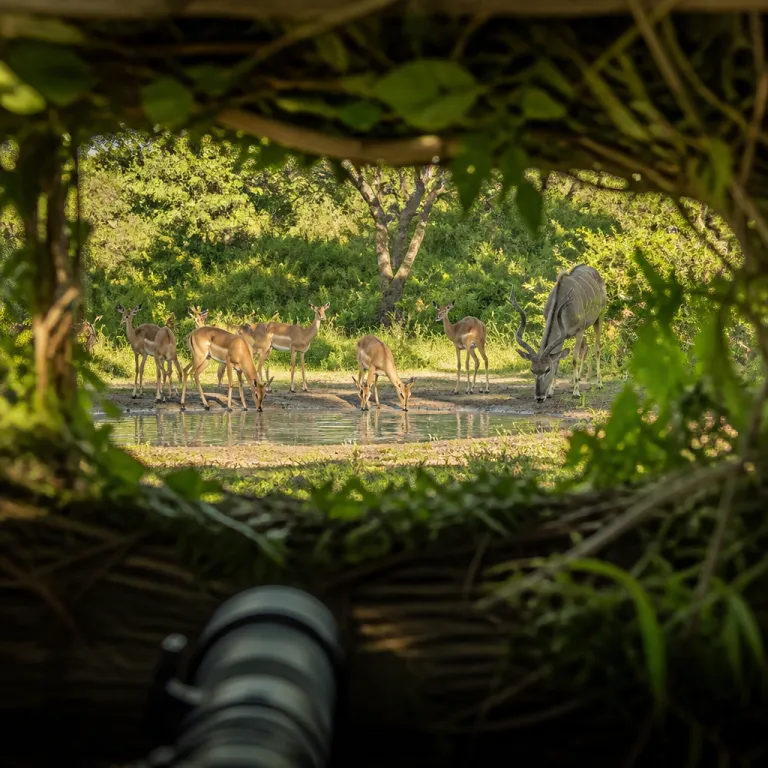
What a safari photography hide really is
A safari photography hide is a deliberately concealed structure that lets you watch wildlife at close range without being seen. A photographic hide is usually positioned beside water, a game trail, or a salt lick, so animals will approach naturally and behave as if no safari vehicle is present. For families planning a photography safari in Africa, this kind of hide safari can feel like stepping backstage into the private lives of animals.
Across Africa, photographic hides range from simple timber shelters to sophisticated underground rooms with glass viewing ports at eye level with elephants. Some hides are dug into the earth so your camera lens sits just above the water surface, which transforms ordinary wildlife photography into a sequence of intimate reflections and low silhouettes. Elevated hides, by contrast, give photographers and non photographers a wider view of the landscape, which suits observing multiple species moving through a national park or private reserve.
Operators now list more than 2 400 photographic hides across Africa, from Kenya and Botswana to South Africa, and that number keeps growing as photo safaris become more specialised. The best safari photography hide guide Africa travellers can follow starts by understanding that a hide is not a casual viewpoint but a purpose built tool for serious photographic work. When you book a photo safari or broader wildlife photography safari, ask whether the lodge has a permanent photo hide or uses mobile hides that can be repositioned with the seasons.
Ground, water and elevated hides: how design shapes your images
Ground level hides place your camera at the same height as the animals, which is why many wildlife photographer guides insist that eye level is the single biggest upgrade you can give your images. From this position, a lion or antelope fills the frame with presence, and even a small bird feels monumental in the final african photo. Underground photographic hides in South Africa and other regions of Africa push this further, letting photographers shoot from below the waterline so drinking elephants appear enormous and the background melts into soft colour.
Water level hides are especially powerful during the dry season, when every species in the area will eventually circle back to the last reliable waterhole. A well designed photo hide beside such a pool can deliver a full day of wildlife photography without a single vehicle moving, which is ideal for a small group that includes children who tire of long drives. If you are planning a specialist hide photography safari, this is where you should ask detailed questions about how close the hide sits to the water and how the light tracks across it.
Elevated hides, often built into trees or raised platforms, offer a different kind of photography hide experience that suits wider environmental images and layered compositions. From above, you can frame herds of animals crossing dusty pans, or track predators as they move between patches of shade, which is valuable when you are building a varied safari photography portfolio. For families fascinated by primates, pairing an elevated hide safari with a gorilla focused trip and reading a detailed resource such as the guide on how much a silverback gorilla really weighs in the wild can deepen your understanding of animal anatomy and behaviour before you travel.
How hides change behaviour, light and the feel of your safari
Traditional safaris rely on a vehicle to move you towards wildlife, which inevitably shapes how animals react and how your images look. When you sit in a well placed photography hide, the dynamic reverses and the wildlife comes to you, which calms the scene and lets natural behaviour unfold in front of your lens. This is the core promise behind any serious safari photography hide guide Africa travellers should read before booking.
Because a hide masks your outline and scent, animals often approach much closer than they would to a vehicle, and they linger longer at the water or salt lick. That extra time lets wildlife photographers refine composition, wait for clean backgrounds, and experiment with different shutter speed choices as the light shifts. It also means children and non photographers in your small group can simply sit and watch, absorbing the rhythms of an African national park without the constant stop start of game drives.
Light behaves differently too when you are fixed in one place, especially at water level or eye level with the surface. Early and late in the day, a photographic hide beside a pan in South Africa or Botswana will give you side light that sculpts muscles, tusks, and feathers in a way that flat midday light from a vehicle never will. If you are building a longer journey that includes forest species, pairing hide sessions with a primate focused itinerary and reading an in depth comparison of mountain gorilla versus lowland gorilla for safari travellers can help you plan which habitats and photographic hides to prioritise.
Key questions to ask before booking a hide based safari
Before you commit to any photography safari that advertises a hide, interrogate the details with the same care you would apply to a camera purchase. Ask exactly how far the photo hide sits from the water or main game trail, because five metres versus twenty metres will radically change your images and lens choices. Clarify whether the photography hide is available at dawn and dusk, or only during safer midday hours when animals may be less active.
Exclusivity matters too, especially for a small group or family that wants a calm experience. Some photographic hides are shared between several vehicles, which can mean a crowded space and limited angles for serious wildlife photography, while others are booked privately for one vehicle or one family at a time. Ask whether a qualified safari guide or wildlife photographer will be present in the hide, because their fieldcraft and understanding of species behaviour can transform a static wait into a masterclass.
Safety and ethics should be part of the conversation whenever you plan a hide safari in Africa. Confirm that the lodge follows strict rules on baiting and does not feed animals to draw them closer to the photographic hide, which can alter natural behaviour and create long term problems. Reputable operators will also brief you on noise discipline, flash restrictions, and how to move inside the hide so you do not silhouette yourself in the windows and alarm the animals.
Camera settings and equipment for hide photography
Hide photography rewards preparation, because once you are in the structure you cannot easily change lenses or reposition tripods without disturbing the scene. For most wildlife situations, a zoom lens in the 100 to 400 millimetre range on a modern camera body will handle both close portraits and wider environmental images from a fixed photographic hide. Many photographers also carry a second body with a wider lens for sudden action, such as a herd of animals charging into the water or a predator appearing at the edge of the frame.
Shutter speed is the setting that will make or break your african photo when animals move quickly at close range. As a baseline for safari photography from a hide, aim for at least 1/1000 second for walking subjects and 1/2000 second or faster for running or splashing behaviour, raising ISO as needed to maintain a wide aperture. Because you are seated and often working at eye level, a solid tripod or beanbag is invaluable for keeping the camera steady during long waits, especially in low light at the start and end of the day.
Silent or electronic shutters are a major advantage in a confined photo hide, where the clack of a mechanical shutter can spook nervous species. Many wildlife photographers also favour back button focus and continuous autofocus modes, which let them track movement smoothly as animals approach the water. The official guidance from experienced operators is clear on the basics of gear, stating that “A camera with a telephoto lens and tripod is recommended.”
Why hides work for families and non photographers
Not every traveller on a photographic safari is obsessed with histograms and lens charts, and a well designed hide can be the perfect compromise for mixed interests. Because you are not bouncing around in a vehicle, children can nap, sketch, or quietly watch as wildlife arrives and departs, while the keen photographer in the family works on images from a stable platform. The rhythm of a long hide session also suits travellers who want a more contemplative experience of Africa, rather than a checklist of species.
There is a meditative quality to sitting in silence, listening as birds announce the approach of larger animals and the first hoof steps crunch on dry season earth. Over a few hours, you start to recognise individual species by sound and silhouette, which deepens your connection to the ecosystem far beyond a quick stop at a waterhole viewpoint. For many guests, this slow immersion becomes the emotional highlight of their photo safaris, even if they never touch a camera.
Families who split their time between vehicle based safaris and hide sessions often report that the hides deliver their best stories, not just their best images. A leopard drinking at arm’s length, an elephant calf learning to use its trunk, or a nervous antelope edging towards the water all feel more intense when you are at eye level and the animals have chosen to come to you. If you are planning a broader African journey that includes primate trekking or other specialist wildlife experiences, resources such as an in depth guide for safari travellers comparing mountain gorillas and lowland gorillas can help you decide how to balance hides, walks, and drives.
Key figures on photographic hides and wildlife observation
- Across Africa there are an estimated 2 475 photographic hides in operation, according to HideFinder, reflecting rapid growth in photography focused safaris over the past decade.
- HideFinder also reports that photographic hides now exist in 186 countries worldwide, but Africa remains the reference point for immersive wildlife photography from hides.
- Operators increasingly offer both daytime and nighttime hide sessions, creating year round opportunities to photograph nocturnal species without using intrusive spotlights.
- Innovation in underground hide design has accelerated, with more lodges investing in eye level waterhole hides that minimise human impact while maximising close range photographic opportunities.
FAQ about safari photography hides in Africa
What is a photographic hide on safari ?
A photographic hide on safari is a purpose built, concealed structure that allows you to observe and photograph wildlife without disturbing natural behaviour. It is usually positioned near water, game trails, or feeding areas so animals approach of their own accord. This setup gives photographers closer, calmer encounters than they typically achieve from a moving vehicle.
Where in Africa can I use photographic hides ?
Photographic hides are now found across much of Africa, with strong concentrations in Kenya, Botswana, and South Africa, as well as in private reserves bordering major national parks. Many specialist photo safaris base their itineraries around these hides, moving between properties that offer different habitats and species. When researching, look for lodges that highlight permanent underground or water level hides rather than occasional pop up structures.
Do I need special equipment for hide based wildlife photography ?
You do not need exotic equipment, but a camera with a telephoto zoom lens and a stable support such as a tripod or beanbag will make a big difference. Because animals can approach very close to a hide, a flexible zoom in the 100 to 400 millimetre range is often more useful than a single long prime lens. Fast, reliable autofocus and the ability to shoot at higher ISO values are also valuable when light is low at dawn and dusk.
How long do typical hide sessions last on safari ?
Hide sessions on safari usually last from two to four hours, often centred on peak activity around dawn or late afternoon. Some lodges offer full day access to a photo hide, especially during the dry season when animals visit waterholes continuously. For families, shorter sessions with the option to leave mid way tend to work best, particularly with younger children.
Are safari photography hides safe for families with children ?
Well designed safari photography hides are built with safety as a priority, using solid construction, secure doors, and carefully planned entry routes that avoid disturbing wildlife. Many lodges welcome children into hides, provided they can remain quiet and follow the guide’s instructions. Always confirm age policies, safety protocols, and whether a guide will accompany your small group before booking a hide based experience.