Why a self drive safari in Kruger National Park suits discerning couples
Kruger National Park is the rare African reserve where you can design a self drive safari that feels genuinely wild yet reassuringly structured. For couples used to curated trips, this national icon in South Africa offers a controlled experiment in freedom, with gates, rules and rest camps giving shape to long days among serious wildlife. A self drive safari Kruger National Park itinerary can be as lean or as indulgent as you wish, but the best experiences come when you treat the park like a living city of animals rather than a theme park of game drives.
The park stretches over 19 485 km² across Mpumalanga and Limpopo, which means you will never “do” Kruger in a single trip (SANParks Kruger overview). Instead, think in zones and choose two or three rest camps as bases, then build each safari day around one focused park drive at dawn and another shorter drive safari loop before gates close at sunset. This rhythm keeps you aligned with animal behaviour, respects the national park rules, and leaves space for slow lunches, pool time and the kind of unhurried conversations that make a couple’s safari Kruger escape feel like a proper holiday.
Self drive safaris here are not only about cost, although the value is compelling compared with a fully guided safari in a private game reserve. With careful planning, a self drive safari Kruger National Park holiday can start from roughly 150 US dollars per person per day while still delivering serious game viewing. A typical daily breakdown for two people might include about 80 to 120 US dollars for a simple rest camp bungalow, 25 to 35 US dollars per person for conservation fees, and roughly 20 to 30 US dollars for fuel and basic groceries (SANParks tariffs and conservation fees). That estimate assumes two people sharing, self-catering most meals and using a standard rental vehicle; it excludes international flights and private lodge packages. The trade off is that you become your own guide, so you must understand the roads, the rules and the risks, or you will spend more time in traffic jams than with animals.
Gate to gate logistics, roads and how Kruger really works
Every self drive safari Kruger National Park plan starts with the gates, because they dictate when you can enter, move and rest. Entry gates open at sunrise and close at sunset, and internal rest camps follow similar patterns, so your game drives must be plotted backwards from those times (SANParks Kruger gate times). If you misjudge distance or speed limits on park roads, you will either rush past wildlife or risk fines and disciplinary action from Kruger National Park rangers.
Speed limits are non negotiable; 50 km/h on tar roads and 40 km/h on gravel, and you should often drive slower if you want to see more than elephant backsides. Tarred routes like the main Kruger drive between Skukuza, Lower Sabie and Olifants rest camp are smoother and faster, but they also attract more traffic, especially during school holidays in South Africa. Gravel roads, by contrast, reward patience with quieter sightings, fewer vehicles and a stronger sense that you are in a true South African wilderness rather than a busy national park highway.
Plan each park drive with a clear objective, whether that is a sunrise loop along the Sabie River for cats or a mid morning detour to a hide for birds. For couples comparing destinations, this is where Kruger differs from Hwange or other reserves; our detailed comparison of Hwange National Park versus Kruger National Park unpacks how self drive safaris here rely on infrastructure as much as on animals. Use the official paper map, not only a GPS, because it shows waterholes, picnic sites and rest camps, which are the real anchors of a successful safari day.
Choosing routes: Big Five, birding or quiet landscapes
On a self drive safari Kruger National Park journey, route choice is the difference between a meditative day and a convoy of vehicles jostling for the same lion. The southern Kruger Park, around Lower Sabie and Skukuza, is famous for dense wildlife and frequent Big Five game drives, but it can feel busy in peak periods. Couples who value space as much as sightings often prefer a park drive in the central region around Olifants rest camp, where sweeping vistas and elephant herds replace traffic.
For predators and wild dogs, the corridor between Crocodile Bridge, Lower Sabie and Tshokwane remains one of the best self drive safaris in South Africa. Here, early morning game drives along the river often produce leopard, hyena and sometimes painted wolves trotting the roads like they own them. If you are more interested in birds and quiet, the northern Kruger National Park sector towards Punda Maria and Pafuri offers ethereal fever tree forests, fewer vehicles and a different set of animals, from nyala to rare raptors, though sightings can be more subtle than in the south.
Think of each safari day as a themed chapter rather than a checklist of animals. One day, you might focus your drive safari on river loops and low level bridges, watching hippos and crocodiles while scanning for kingfishers and bee eaters. Another day, you could head to the open plains near Satara for classic game reserve scenes of zebra, wildebeest and lions, then finish with a slow Kruger drive back to camp as the light softens, much like the golden hour boat runs we describe in our feature on where the Zambezi River flows through Africa’s wild safari heartlands.
Safety, close encounters and when to book a guided safari
Driving yourself in a national park filled with large animals is a privilege that comes with serious responsibility. Guided safaris are statistically safer because professional rangers read behaviour instantly, while a self drive safari Kruger National Park experience requires you to learn those cues in real time. Lightning storms, extreme heat and flooded low water crossings add another layer of risk, especially in the rainy season when roads can change character within minutes.
There are a few non negotiable rules; you never leave your vehicle except in designated areas, you never crowd animals, and you always give elephants, rhinos and buffalo more space than you think they need. If a bull elephant steps onto the road ahead, stop at a respectful distance, keep the engine running and wait for him to choose his direction rather than trying to squeeze past. With predators, including lions and wild dogs, keep windows mostly up, stay quiet and avoid boxing them in with other vehicles, because a stressed animal will either retreat or react unpredictably.
For first time visitors, a hybrid model often works best; spend your first safari day or two on a guided safari from a rest camp or lodge, then apply what you learn on your own game drive later in the trip. This is especially valuable in the wet season, when reading tracks, mud and water levels on park roads can be tricky without experience. As the official guidance from Kruger National Park puts it, “Is it safe to self-drive in Kruger? Yes, if park rules are followed.”
Budget, where to stay and how to structure each safari day
One of the strongest arguments for a self drive safari Kruger National Park holiday is the control it gives you over budget without sacrificing access to wildlife. At the core of the park’s model are state run rest camps, managed by SANParks, which range from simple bungalows to family cottages and basic campsites. These rest camps are not polished lodges, but they place you inside the game reserve with gates, fuel, small shops and often a restaurant, which is exactly what you need for efficient game drives.
For couples, a realistic mid range budget in South African rand often includes a standard bungalow in a rest camp, a rental SUV rather than a 4x4, and daily conservation fees, which together can average around 150 to 250 US dollars per person per day (SANParks accommodation and conservation fee schedules). Private lodges inside or bordering the Kruger Park game reserve can easily double or triple that figure, but they include guided safaris, meals and drinks, so the comparison is not like for like. The key is to decide how many nights you want the full lodge experience, with hosted game drives and sundowners, versus how many nights you prefer the independence of a self catered rest camp stay.
Structure your safari day around the animals, not the restaurant opening times. A classic pattern is to leave camp at gate opening, drive for three to four hours with coffee and snacks, then return to rest during the harsh midday heat when wildlife is inactive and the risk of dehydration on a park drive is highest. In the late afternoon, head out for a shorter Kruger drive loop, then return to your rest camp braai or lodge dinner, perhaps planning your next trip over a glass of wine while reading about other immersive experiences such as our guide to snorkeling in the Sea of Cortez.
Practical tips, vehicles and using tech without losing the wild
Kruger National Park is designed so that a standard sedan can handle most main roads, and the official guidance is clear; “Do I need a 4x4 vehicle for a self-drive safari? No, standard vehicles are suitable for main roads.” That said, a slightly higher clearance SUV makes a self drive safari Kruger National Park itinerary more comfortable, especially on corrugated gravel and when you need extra visibility over roadside grass. Vehicle weight and entry regulations are periodically updated, so always check SANParks information before you finalise your rental.
Fuel is available at major rest camps, which means you can plan ambitious game drives without the anxiety of running dry in the middle of the reserve. The park has embraced technology with mobile apps that share real time wildlife sightings, and these can be useful for understanding general patterns, but treat them as background noise rather than a sat nav for animals. Chasing pins on a screen will turn your safari day into a frantic park drive from one reported lion to another, while the best sightings often come when you sit quietly at a waterhole and let the animals write the script.
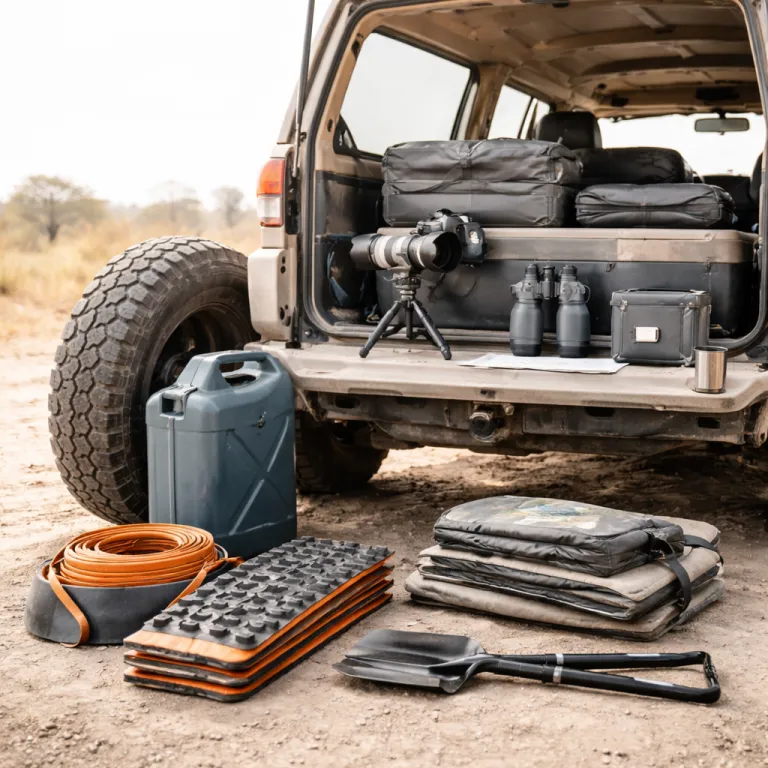
Pack as if you are heading into a remote corner of South Africa, even if the next camp is only 60 km away. At minimum, include:
- At least five litres of drinking water per person in the vehicle
- A basic first aid kit and any personal medication
- A paper map of Kruger National Park, even if you use GPS
- Binoculars and a camera with spare batteries or power bank
- A headlamp or small torch for use inside camp after dark
Remember that guided safaris, whether from a lodge or a rest camp, remain valuable even for experienced self drivers, because a single focused game drive with a sharp ranger can recalibrate how you read tracks, birds and behaviour across the entire Kruger National Park landscape.
Key figures for planning a self drive safari in Kruger
- Kruger National Park covers 19 485 km² across Mpumalanga and Limpopo, making it one of the largest accessible self drive safari reserves in Africa (SANParks data; see the official Kruger National Park overview on the South African National Parks website).
- The park protects around 147 mammal species, which means a single game drive can legitimately include elephants, lions, leopards, rhinos, buffalo and smaller predators such as wild dogs in the same ecosystem (SANParks data, summarised from the Kruger National Park mammal species list).
- With approximately 517 recorded bird species, Kruger ranks among the most diverse birding destinations in South Africa, so a quiet park drive can be as rewarding for birders as a classic Big Five safari day (SANParks data, based on the official bird checklist for the park).
- Self drive safaris typically start from about 150 US dollars per person per day including simple rest camp accommodation, a share of vehicle rental, fuel and daily conservation fees, which is often less than half the cost of a fully inclusive luxury lodge stay in a private game reserve.
- Entry gates and internal rest camps generally open at sunrise and close at sunset, so travellers must plan game drives within a window of roughly 11 to 12 hours of daylight, depending on the season (gate times are published annually by SANParks).
- Most visitors access Kruger via regional flights to Skukuza, Hoedspruit or Kruger Mpumalanga International Airport near Nelspruit, with typical transfer or self drive times to the nearest park gates ranging from about 30 minutes to three hours.
FAQ: self drive safari Kruger National Park
Do I need a 4x4 vehicle for a self drive safari in Kruger
You do not need a 4x4 for a self drive safari Kruger National Park holiday if you stick to the main tar and well graded gravel roads. A standard sedan or compact SUV is sufficient for most routes, though higher clearance improves comfort and visibility. Reserve a 4x4 only if you plan extensive use of rougher gravel roads or are travelling in the peak rainy season.
Are there fuel stations and shops inside Kruger National Park
Yes, major rest camps such as Skukuza, Lower Sabie, Satara and Olifants rest camp have fuel stations, small supermarkets and restaurants. This infrastructure allows you to plan long game drives without leaving the reserve, as long as you refuel whenever you pass a larger camp. Always carry extra water and snacks in the vehicle, because distances between camps and picnic sites can be significant.
Is it safe to self drive in Kruger for first time visitors
Self drive safaris are considered safe when you follow park rules, respect speed limits and never leave your vehicle outside designated areas. First time visitors often benefit from booking at least one guided safari or game drive from a lodge or rest camp to learn how rangers interpret animal behaviour and road conditions. Combining guided safaris with your own park drive days offers both safety and flexibility.
What is the best time of year for a self drive safari in Kruger
The dry season, from roughly May to September, is generally the best period for a self drive safari Kruger National Park itinerary because vegetation is thinner and animals concentrate around water sources. Cooler temperatures also make long game drives more comfortable, especially for couples who enjoy early starts and extended hours on the roads. The green season brings lush landscapes and excellent birding, but it can be hotter, stormier and more challenging for spotting elusive animals.
Can I book accommodation inside Kruger National Park directly
Yes, you can and should book rest camp accommodation directly with SANParks, especially for popular camps like Lower Sabie and Olifants rest camp, which fill quickly in peak periods. Private lodges in and around the Kruger Park game reserve are booked separately, usually through the properties or specialist safari operators. Securing your camps and lodges early gives you the freedom to design a coherent route and avoid long backtracking drives.
Trusted references for further planning
- SANParks – official Kruger National Park information, maps, gate times, conservation fees and regulations.
- TravelSafeSOS – safety advisories on weather, road conditions and health for South Africa.
- South African National Parks scientific services – wildlife, conservation and visitor impact reports that inform responsible self drive safari planning.