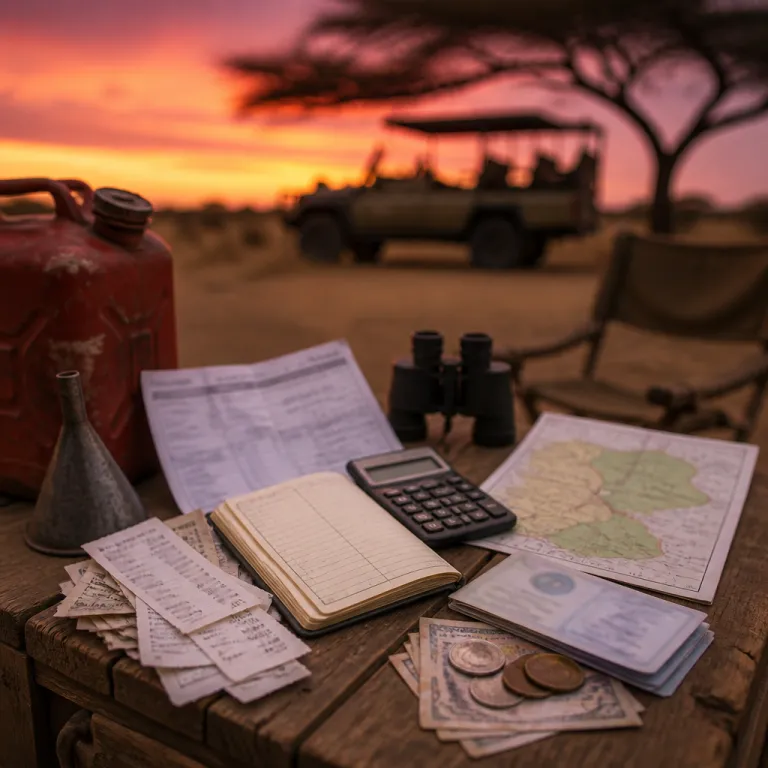
Why safari prices feel opaque: reading beyond “from X per person”
Safari brochures rarely explain how each euro of your budget is spent. When you start serious safari cost breakdown and budget planning, you quickly see that the headline rate hides a layered structure of costs and fees. For a family weighing a first African safari against other long-haul travel, that opacity can feel like a gamble.
On a typical Africa safari, accommodation and meals account for roughly forty percent of the total cost, while park fees and conservation levies can reach thirty percent of what you pay.1 Industry data collated by Safari Tz indicates that the average daily safari cost sits around 500 USD per person day for guided trips in East Africa,2 yet safari costs for a family of four can effectively double once you add internal flights, visas, vaccinations and tips. This is why a clear, itemised safari price breakdown is essential before you send a deposit to any safari companies.
Think of your safari budget as a stack of layers rather than a single price tag. At the base sit international travel costs to East Africa or Southern Africa, then internal transfers by road or air, followed by the nightly per-person rate for your camp or lodge. On top of that come national park fees, community levies and activities such as gorilla trekking, and finally the soft but significant line items of tips, insurance and pre-trip medical checks that complete realistic safari trip budgeting.
The complete safari cost stack: from flights to park fees
Every African safari starts with a flight, and for most families this is the single largest upfront cost. Return travel from Europe or North America to Kenya or Tanzania usually ranges from 700 to 1,500 USD per person, depending on season and routing.3 Once in Africa, light aircraft hops between national parks can add 200 to 800 USD per sector, which means internal flight costs can rival several per-person-night accommodation bills on a short trip.
Accommodation then shapes the rest of your safari costs, with three broad tiers that matter for families. At the lower end, a budget safari using simple lodges or camping inside or near a national park might cost 200 to 400 USD per person night, often excluding park fees and some activities. Mid-range properties with comfortable family tents, reliable guiding and decent food usually sit between 600 and 1,500 USD per person night, while high-end luxury camps and full luxury safari lodges can exceed 2,000 USD per person night in prime season.
Park fees are the quiet multiplier that many first-time travelers underestimate. In Kenya and Tanzania, national park and conservancy park fees often run between 50 and 100 USD per person day, and they apply to both adults and children in many national parks.4 One verified industry answer from Safari Tz puts it bluntly: “Often, but confirm with your operator.” when asked whether park fees are included in safari packages, and that single sentence should sit at the top of your safari budgeting checklist.
Beyond these headline items, you still need to budget for visas, vaccinations and insurance. Visa costs for Kenya–Tanzania combinations can add 50 to 100 USD per person, while yellow fever certificates and malaria prophylaxis can add another 100 to 200 USD per person depending on your home country.5 Finally, comprehensive travel insurance with emergency evacuation cover is non-negotiable on any Africa safari and usually costs a modest fraction of your total safari cost, yet it protects you against the most serious risks.
For a deeper numerical view of how these elements interact, it is worth reading a detailed guide to understanding the true cost of an African safari, such as the breakdowns published by Safari Tz, which dissect each line item in a way that complements your own planning.2 Use that kind of structured analysis alongside quotes from reputable safari companies to test whether a proposed itinerary really matches your family’s budget and expectations. When operators are transparent about each cost and fee, you can compare safaris on value rather than on vague marketing promises.
Where your money goes: conservation, communities and the fuel behind game drives
Once you have the total safari cost on paper, the next question is where that money actually flows. On a well-run African safari, a meaningful share of your budget supports conservation, anti-poaching patrols and local employment in remote areas. In Kenya–Tanzania circuits, park fees and conservancy levies often fund ranger salaries, road maintenance and wildlife monitoring that keep national parks functioning.
Accommodation costs cover far more than a canvas tent and a bed with a view. Remote camps in the southern circuit of Tanzania or in lesser-known national parks of East Africa must truck in fuel, food and building materials over long distances, which raises the underlying costs of every person day in camp. Staff wages, guide training, vehicle maintenance and the logistics of running generators or solar systems all sit inside that nightly rate, whether you choose a budget safari camp or a high-end property.
Community fees are another quiet but important line in your safari budget. Many private conservancies bordering a national park pay land lease fees to local communities, and your per-person-day conservation levy helps fund schools, clinics and grazing agreements. When you pay for a Tanzania safari in the southern circuit or a Kenya-based Africa safari in the Maasai Mara conservancies, you are effectively renting wildlife habitat from local landowners for the duration of your stay.
Fuel is the invisible cost behind every game drive and walking safari. A single vehicle on an African safari can burn significant diesel each day, especially in large national parks where wildlife densities are lower and guides must cover more ground. When you see a line item for a private vehicle on a luxury safari, remember that you are paying not only for exclusivity but also for the extra fuel, maintenance and staff time that a dedicated guide and tracker require.
To refine your own safari spending plan, study how different operators explain these flows of money. Some safari companies publish clear diagrams showing what percentage of your safari costs go to conservation, staff and operations, while others offer only a single all-inclusive rate. For more structured advice on aligning your budget with your values, a guide to expert budgeting tips for safari and wildlife adventures can offer a useful framework for weighing cost against conservation impact and family comfort.
The family multiplier: how children, rooms and rules reshape your budget
Families feel safari costs more sharply because every line item multiplies. A rate that looks manageable per person quickly becomes daunting when you apply it to two adults and two children over ten days. That is why financial planning for a premium family safari must start with a realistic headcount and rooming plan.
Most mid-range and luxury safari camps in Kenya and Tanzania charge children between fifty and one hundred percent of the adult rate, depending on age and season. Some national parks and private conservancies also apply full park fees to children above a certain age, which means your park fees line can almost double once your kids cross that threshold. Age minimums matter too, because several Africa safari properties will not accept children under six to twelve years in open vehicle areas, forcing families either to book private-use houses or to choose more flexible national parks.
Room configuration is another subtle driver of safari costs for families. A family tent or interleading rooms can be more cost effective than booking two separate units, especially in mid-range properties that price per room rather than strictly per person night. In contrast, some high-end luxury safari lodges insist on a private vehicle for families with younger children, which adds a daily cost but can transform the experience by allowing flexible game drive times and shorter outings.
Activity restrictions also shape value for money on an African safari with children. Walking safaris, canoe trips and gorilla trekking often have strict age limits, so paying for a high-cost activity that half the family cannot join is rarely good budget planning. When you evaluate safari companies, ask them to map which activities are realistically suitable for each day of your itinerary, and insist that your cost outline reflects only those experiences your family will actually use.
Finally, remember the soft costs that grow with each extra person on the trip. Tips for guides and lodge staff, laundry, snacks in transit and airport meals all rise with family size, and they can add several hundred dollars to your overall safari costs over ten days. Building a ten to fifteen percent contingency into your safari budget gives you room for these extras without anxiety every time someone orders a second hot chocolate after an early morning game drive.
Three budget tiers compared: self drive, mid range comfort and high luxury
Looking at real numbers across three tiers clarifies what different safaris actually cost. At the entry level, a self-drive or guided budget safari in a national park such as Tarangire in Tanzania or Tsavo in Kenya might run 200 to 400 USD per person night. That usually buys simple accommodation, shared vehicles and basic but adequate guiding, with park fees and some meals sometimes excluded from the initial safari cost.
In the middle, a curated mid-range Africa safari offers the best balance for many premium families. Expect to pay 600 to 1,500 USD per person night for well-located camps in headline national parks such as the Serengeti or Maasai Mara, with most meals, game drives and park fees included in the package. At this level, safari companies can usually arrange family-friendly guides, flexible mealtimes and connecting rooms, which makes the higher safari costs feel justified when you factor in comfort and ease.
At the top end, a fully hosted luxury safari in East Africa or the southern circuit of Tanzania can exceed 2,000 USD per person night, and premier camps now often surpass 3,000 to 5,000 USD per person night.6 These rates typically include private vehicles, top-tier guides, fine dining and sometimes even charter flights between remote national parks, but they may still exclude premium drinks, spa treatments and some activities. The key is to read the fine print and ensure your cost summary lists every inclusion and exclusion so you can compare a high-end itinerary honestly against a more modest mid-range option.
Across all tiers, the pattern is consistent: the more remote and exclusive the area, the higher the underlying costs of fuel, staff and logistics. A budget safari near a major gateway town will always be cheaper than a private concession deep in the Okavango or Ruaha, even if both are technically in Africa. When you evaluate quotes, ask operators to price the same number of person-day stays across different national parks so you can see how location alone shifts the safari cost.
For families who value wildlife density and guiding quality over thread count, a smart strategy is to mix tiers within one itinerary. You might start with a few nights in a comfortable mid-range camp in a famous national park, then finish with a shorter stay at a high-end property that offers a private vehicle and specialist guiding. This blended approach keeps overall safari costs within a defined budget while still delivering a few days of the best safari experience that East Africa can offer.
Timing, negotiation and smart routing: how to bend the budget without breaking the magic
Once you understand each line in your safari cost breakdown, you can start to bend the numbers in your favour. Seasonality is the most powerful lever, because the same African safari can cost half as much in shoulder season as it does in peak migration weeks. For families with flexible school calendars, shifting travel dates by even a few weeks can unlock mid-range or luxury safari options that would be unreachable in high season.
Shoulder seasons in Kenya and Tanzania often bring fewer vehicles, softer light and lower rates, even in marquee national parks. Many safari companies quietly discount per-person-night rates or offer stay-four-pay-three deals during these windows, which effectively lowers your per-person-day cost without sacrificing quality. When you negotiate, ask explicitly about shoulder season offers, child discounts and whether park fees are included, then plug those figures back into your safari planning spreadsheet.
Routing is another underused tool for controlling safari costs. Flying between every national park is convenient but expensive, while a mix of road transfers and a few strategic flights can keep the budget in check without exhausting the family. One smart tactic is to focus on a single region, such as the southern circuit of Tanzania or a Kenya–Tanzania combination in the Mara and Serengeti, rather than hopping across distant national parks that require multiple charter flights.
For travelers interested in following seasonal wildlife movements, slow travel itineraries built around migration corridors can also reduce costs. By spending more nights in fewer places, you cut down on transfer expenses and often secure better per-person-night rates, especially on longer stays. A useful reference is a guide to following the elephants along slow travel routes, which shows how extended stays in key areas can deliver the best safari experiences without constant movement.
Finally, consider how you book. Direct bookings with camps can sometimes yield better value, but a skilled specialist agent who understands Africa safari logistics may save you money by avoiding inefficient routings and redundant flights. Whichever route you choose, insist on a written safari cost breakdown that lists every fee, from gorilla trekking permits to private vehicle surcharges, so your financial planning rests on facts rather than assumptions.
Key figures every safari planner should know
- Average daily safari cost for a guided trip in East Africa is around 500 USD per person day, according to industry data from Safari Tz, which aligns with mid-range itineraries in major national parks.2
- Accommodation typically represents about forty percent of the total safari cost, based on Safari Tz breakdowns, which means upgrading your lodge tier has a larger impact on safari costs than adding an extra activity.1
- Park and conservation fees can account for roughly thirty percent of overall safari costs, as reported by Safari Tz, especially in heavily visited national parks where park fees exceed 50 USD per person day.1,4
- Charter and scheduled light aircraft flights between national parks often range from 200 to 800 USD per sector, which can equal several per-person-night stays at a budget safari camp on a short itinerary.3
- Tips for guides and lodge staff usually add 20 to 50 USD per person day on a typical African safari, which means a family of four should allocate several hundred dollars for gratuities over a ten-day trip.2
FAQ about safari costs and budget planning
What is the average cost of a safari for one person ?
For a classic guided African safari in Kenya or Tanzania, you should expect an average daily safari cost of about 500 USD per person day in mid-range camps, excluding international flights.2 Budget safari options can fall below this, while high-end luxury safari properties can cost several times more per person night. Your final safari cost will depend on season, park fees, internal flights and how many national parks you include.
Are park fees usually included in safari packages ?
Many safari companies include national park fees and conservancy charges in their quoted rates, but practices vary widely between operators and destinations. Some budget safari offers exclude park fees to keep the headline cost low, leaving you to pay these charges on arrival at each national park gate. Always ask for a written safari cost breakdown that lists park fees per person day so you can compare safaris accurately.
How can I reduce safari costs without compromising the experience ?
The most effective levers are traveling in shoulder season, focusing on fewer national parks and choosing strong mid-range camps instead of top-tier luxury safari lodges. You can also trim internal flight costs by combining road transfers with a few key flights, and by avoiding unnecessary one-night stops that add extra per-person-night charges. Finally, confirm all inclusions and exclusions in writing so your safari budget does not suffer from surprise fees on arrival.
Is a private safari vehicle worth the extra cost for families ?
A private vehicle adds a noticeable daily cost, especially in high-end camps, but it can transform the experience for families with younger children. You gain control over game drive times, duration and pace, which makes early mornings and long sightings more manageable for everyone. When you weigh this against the overall safari costs, many premium families find that a few days of private guiding in key national parks offer excellent value.
How far in advance should I plan and budget for a safari ?
For peak season trips to popular national parks in East Africa, start your safari cost breakdown and budgeting at least six months ahead to secure family-friendly rooms and good flight connections. The planning phase typically runs three to six months before travel, followed by a booking phase one to three months before departure. Building your budget early allows you to compare safari companies calmly, adjust dates for better value and allocate extra funds for unforeseen expenses such as medical checks or visa changes.
Worked example: a 7-night mid-range family safari
To see how these numbers play out, imagine a family of four booking a seven-night mid-range Kenya–Tanzania safari in shoulder season. They spend three nights in the Maasai Mara and four nights in the Serengeti, using shared vehicles and one internal flight. International flights from Europe cost 900 USD per person, or 3,600 USD total. Mid-range camps average 650 USD per person night, so accommodation and meals come to 18,200 USD for seven nights. Park and conservancy fees at 80 USD per person day add roughly 2,240 USD, while one regional flight between parks at 300 USD per person adds 1,200 USD. Visas, vaccinations and insurance total about 1,200 USD for the family, and tips at 30 USD per person day add another 840 USD. Their realistic safari cost is therefore close to 27,000 USD, which aligns with the Safari Tz guidance that accommodation and park fees together make up around seventy percent of the overall budget.1,2
Case study: how one family reshaped their safari budget
Consider a real-world example from a premium family who planned a ten-day Africa safari with two children aged nine and twelve. Their first quote focused on peak season in the Serengeti and Maasai Mara, with every transfer by air and all nights in luxury safari lodges. The projected safari cost exceeded 40,000 USD, and park fees for four people over ten days added more than 3,000 USD on their own. After reviewing a detailed safari cost breakdown, they shifted to shoulder season, swapped two luxury camps for strong mid-range properties in the same national parks and replaced one internal flight with a scenic road transfer. Those three changes cut their total safari costs by almost thirty percent while keeping the same number of person days on safari and the same core wildlife areas. The parents later reported that the only difference they noticed on the ground was fewer vehicles at sightings and a more relaxed pace, which underlines how smart timing and routing can matter more than chasing the highest price tag.
Notes and sources
1 Safari Tz sample safari cost breakdowns, summarising typical percentage allocations for accommodation and park fees across mid-range itineraries in East Africa.
2 Safari Tz aggregated pricing data for guided safaris in Kenya and Tanzania, indicating an average of around 500 USD per person day for mid-range trips, plus guidance on tipping norms.
3 Representative economy-class fare ranges from major European and North American hubs to Nairobi and Kilimanjaro, based on recent published airline tariffs and consolidator averages.
4 Official fee schedules from Kenya Wildlife Service and Tanzania National Parks Authority, showing adult and child daily conservation charges for flagship national parks and conservancies.
5 Typical visa fees and vaccination costs drawn from publicly available consular information and travel clinic price lists for common safari source markets.
6 Publicly advertised rack rates from selected luxury safari operators in the Serengeti, Maasai Mara and southern Tanzania, adjusted to a per-person-night basis for high season.