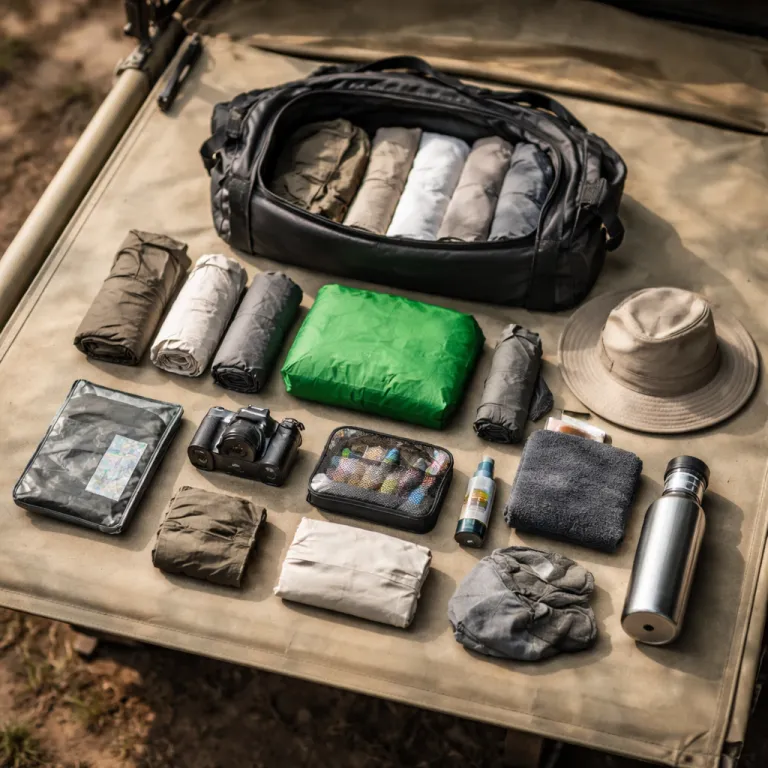
Why safari packing list weight limits shape your entire trip
Light aircraft transfers are the quiet rule makers of any serious safari. On most internal charter flights across Africa, strict luggage weight limits of 15 to 20 kg per person in soft sided bags are enforced to keep small aircraft safe and balanced. Those limits will feel tight at first, yet they become the discipline that turns a chaotic packing list into a focused safari packing strategy.
Safari tour operators and local airlines in Kenya, Tanzania, Botswana and Southern Africa use weighing scales at the airstrip, and they will refuse hard cases that cannot flex into tiny holds. As one operator explains without embellishment, “Small aircraft have limited cargo capacity, necessitating strict weight limits.” That single sentence should guide every decision about what you pack, what you bring in hand luggage and how you think about weight versus comfort on an African safari.
For families moving between several safari camps, those weight limits are not a suggestion, they are the backbone of the itinerary. Charter flights linking Kenya Tanzania routes, or hopping between Botswana lodges and East Africa safari camps, often cap total luggage at 15 kg including hand luggage, so every extra pair of shoes will cost you something else. The reward for respecting the packing guide is speed and ease on travel days, when your lightweight bags slide straight into the aircraft and you are airborne while others are still repacking on the gravel.
The non negotiables: what you really need to bring on safari
Once you accept the safari packing list weight limit, the question becomes what is genuinely non negotiable. For almost every African safari, the core packing list is the same: sun protection, insect repellent, binoculars, a camera with one versatile zoom lens, and a small personal medical kit. These items weigh surprisingly little compared with overpacked luggage full of just in case clothing that will never leave the bag.
Think in systems rather than in individual objects when you pack for Africa, because each system will earn its place against the weight limits. Your sun system might be a wide brimmed hat, high SPF sunscreen, polarised sunglasses and a lightweight scarf that doubles as dust protection on open game drives. Your comfort system will include quick dry underwear, a compact rain jacket for sudden storms, and a fleece or insulated layer for cold dawn drives in East Africa or Southern Africa during the dry season.
Families often ask what to bring for children beyond the obvious clothing and a favourite soft toy. I suggest one small pair of binoculars, a notebook and pencil, and a simple camera rather than multiple devices that add weight and distraction on game drives. For a deeper breakdown of what to bring on safari and how to balance comfort with minimal luggage, use this essential safari packing list for beginners as a practical companion to your own packing guide. When you keep the non negotiables tight, you will find that your bags stay within the safari packing limits without feeling deprived.
Clothing strategy: layering, quick dry fabrics and neutral tones
Clothing is where most travellers lose the battle with any safari packing list weight limit. The aim is not to bring outfits, but to build a compact wardrobe of layers that work across cool mornings, hot middays and chilly evenings in camp. Neutral colours such as olive, stone and khaki suit both East Africa and Southern Africa, keeping you unobtrusive on foot and comfortable in the vehicle.
Start with a base of quick dry shirts and trousers that can be washed easily and will dry overnight in dry season conditions. Two or three long sleeved shirts in breathable, lightweight fabric protect against sun and insects, while two pairs of quick dry trousers zip off into shorts for hotter afternoons on game drives. Add a couple of T shirts for camp, a warm mid layer, and a packable rain jacket that can handle a sudden shower in Kenya or Botswana without dominating your luggage weight.
Footwear deserves particular attention because hiking boots are heavy, yet they are sometimes essential. For most vehicle based game drives in African safari lodges, a pair of sturdy trainers or lightweight hiking boots will be enough, while serious walking safaris in certain camps may justify one pair of full boots and one pair of sandals for camp. To refine your choices and avoid overpacking clothing, this guide to essential clothing choices for your safari adventure offers a clear packing guide that respects both style and strict weight limits on charter flights.
What lodges and safari camps quietly provide so you can pack less
The most effective way to work within a safari packing list weight limit is to understand what African lodges already provide. High end safari camps across Kenya, Tanzania, Botswana and Southern Africa routinely stock quality toiletries, insect repellent in rooms, hairdryers where power allows, and often a small supply of sunscreen. Many safari camps also offer laundry service, which changes the packing equation completely for longer itineraries.
When lodges offer laundry on a same day or next day basis, you can comfortably bring fewer quick dry garments and still feel fresh in camp. Most properties in East Africa and Southern Africa will wash and line dry clothing daily during the dry season, although some will not launder underwear, so pack a few extra pairs of those. Warm blankets and waterproof ponchos are usually provided on open vehicles for cold or wet game drives, which means your own rain jacket can be lighter and more compact without sacrificing comfort.
Families often underestimate how much support camps will quietly provide beyond laundry service and toiletries. Many safari camps keep spare hats, gloves and even basic hiking boots for guests who arrive underprepared, and some lodges in Kenya Tanzania circuits will lend binoculars or a bean bag for camera stability. The more you trust the camp équipe to handle comfort in camp, the more confidently you can keep your bags within the strict weight limits imposed by charter flights between remote airstrips.
Choosing the right bags and managing weight across flights
The bag itself is a critical part of working with any safari packing list weight limit. Local airlines across Africa insist on soft sided duffel bags because they can be compressed into narrow aircraft holds, while hard suitcases simply do not fit and are often refused at check in. Aim for a duffel of around 60 cm in length, which aligns with typical bush plane luggage dimensions and still leaves room for hand luggage such as a small daypack.
Think of your luggage as a modular system that will move smoothly through multiple camps and charter flights. One main soft sided duffel carries clothing, shoes and non fragile items, while a compact camera bag or backpack serves as hand luggage for valuables, documents and a lightweight layer. Use packing cubes to separate clean and dry items from dirty or damp clothing, and weigh the full system at home to ensure you will meet the 15 to 20 kg weight limits enforced on most internal flights.
Families travelling across East Africa or Southern Africa often benefit from planning fewer stops, which reduces the number of times bags are weighed and handled. For a thoughtful argument in favour of longer stays in one ecosystem rather than a frantic circuit of many camps, this case for staying put for a week in one area offers a useful counterpoint to the usual multi camp safari narrative. When your itinerary is calmer, your packing guide can be simpler, your bags lighter, and your experience of each African safari camp deeper and more relaxed.
Camera gear, footwear and the art of leaving things at home
Camera equipment and shoes are the two categories that most often break a carefully planned safari packing list weight limit. The temptation to bring multiple camera bodies, several lenses and a heavy tripod is strong, yet on a moving vehicle in Africa you will use one versatile zoom lens for almost every sighting. A single camera body, a 70 200 mm or 100 400 mm lens, a spare battery and a compact bean bag for stability on game drives will cover almost all situations without overwhelming your luggage weight.
Footwear choices should be equally disciplined, especially when charter flights enforce strict weight limits on every passenger. One pair of lightweight hiking boots or sturdy trainers for walks and uneven camp paths, plus one pair of sandals or slip ons for camp, will be enough for most African safari itineraries. Heavy, high cut boots that never leave the bag are a classic example of packing for imagined dangers rather than the real conditions you will encounter in Kenya, Botswana or Southern Africa during the dry season.
The art of leaving things at home is ultimately what allows you to travel elegantly within the constraints of safari packing. If your lodges offer laundry and your safari camps provide insect repellent, ponchos and blankets, you do not need multiple changes of heavy clothing or bulky outerwear. By trusting the infrastructure of well run camps across East Africa and Southern Africa, you can keep your bags light, your packing list focused and your attention exactly where it belongs, on the quiet moment when the tracker whispers and a leopard steps from the shade you were already watching.
Key figures on safari luggage and weight limits
- Most internal safari flights in Africa enforce luggage weight limits of 15 to 20 kg per person, including hand luggage, to keep small aircraft within safe operating margins according to regional tour operators.
- Typical guidelines for bush plane luggage specify a maximum soft sided bag length of around 60 cm, which allows bags to fit into narrow cargo pods used on many charter flights in East Africa and Southern Africa.
- Many safari operators in Kenya and Tanzania advise guests to limit total bags to one main duffel and one small carry on, which reduces loading time at remote airstrips and improves on time performance for multi stop routes.
- Industry packing guides from African safari specialists consistently show that a streamlined wardrobe of 8 to 10 quick dry clothing items is sufficient for trips of 7 to 10 nights when lodges offer daily laundry service.
FAQ: working with safari packing list weight limits
Why are luggage weight limits enforced on safari flights ?
Weight limits exist because small aircraft used on safari routes have limited cargo capacity and strict balance requirements. As one operator states, “Small aircraft have limited cargo capacity, necessitating strict weight limits.” These constraints ensure safe take off and landing on short, often rough airstrips serving remote safari camps.
What type of luggage should I use for an African safari ?
Local airlines and safari tour operators across Africa strongly recommend soft sided duffel bags rather than hard suitcases. Soft bags can be compressed into tight cargo holds on charter flights, while rigid cases may be refused at the airstrip. Choose a durable, lightweight duffel of about 60 cm in length, plus a small daypack as hand luggage.
Can I bring a hard sided suitcase on safari flights ?
Hard sided suitcases are generally not allowed on internal safari flights because they do not fit easily into the small luggage compartments of light aircraft. Even when they are accepted, they can cause delays as ground staff struggle to load them safely. To avoid repacking on the runway, arrive with soft sided bags that clearly meet the airline guidelines.
How can I stay within a 15 kg safari packing limit for a family trip ?
The most effective approach is to share systems rather than duplicate items for each person. One medical kit, one set of binoculars per adult, a compact camera setup and a tight rotation of quick dry clothing supported by lodge laundry service will keep total luggage down. Weigh bags at home, then remove non essentials until each person’s luggage and hand luggage together sit comfortably under the stated limit.
Do lodges in Kenya, Tanzania and Botswana really offer laundry service ?
Most mid range and high end lodges and safari camps in Kenya, Tanzania and Botswana do offer laundry, especially during the dry season when clothes dry quickly outdoors. Some properties exclude underwear from the service for cultural reasons, so pack a few extra pairs of those. With daily or near daily laundry available, you can confidently reduce the volume of clothing in your packing list and stay well within strict charter flight weight limits.
References
- Porini Camps travel information and packing guidance for Kenya safari flights.
- Acacia Collections advice on what to pack for Tanzania safaris and typical luggage dimensions.
- African Safari Co practical packing guides for light aircraft transfers and multi camp itineraries.