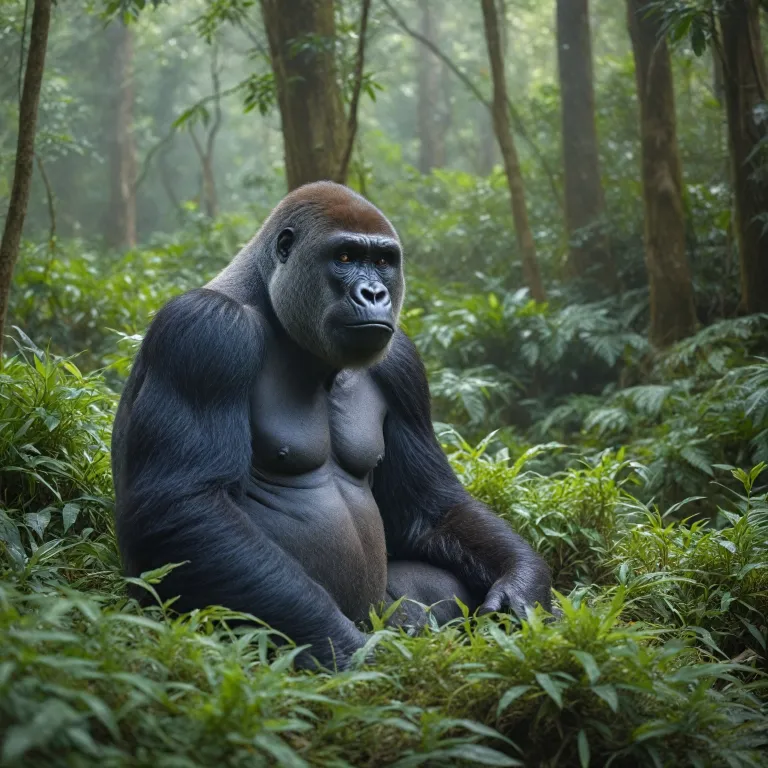
Mountain gorilla vs lowland gorilla in the context of African safaris
Understanding mountain gorilla vs lowland gorilla is essential for travellers planning meaningful wildlife journeys. When you compare each gorilla species in its natural habitat, you begin to see how altitude, vegetation and climate shape behaviour and social structures. This knowledge helps you choose the right national park and gorilla trekking experience for your expectations.
Mountain gorillas are a subspecies of the eastern gorilla and live in cool, high altitude forests. These gorillas mountain populations inhabit places such as Bwindi Impenetrable and other impenetrable national reserves, where dense forests and steep slopes demand good fitness from visitors. Lowland gorillas, by contrast, occupy warmer lowland forests that stretch across Central and West Africa.
Within lowland gorillas, travellers should distinguish western lowland and eastern lowland populations. The western lowland gorilla is the most numerous gorilla species, while the eastern lowland gorilla, also called Grauer’s gorilla, is among the most threatened. Both lowland gorilla subspecies live in flatter forests, which can make access slightly easier but logistically complex due to remoteness.
For safari planners, the question is not only mountain gorilla vs lowland gorilla, but also which national park aligns with your travel style. Some national parks focus on intensive conservation efforts and tightly controlled gorilla trekking permits. Others combine gorillas with classic savannah safaris, allowing you to see where gorillas live alongside elephants, antelopes and predators.
As you read further, keep in mind that all gorillas, whether eastern gorilla or western gorilla, face serious pressures. Conservation efforts have led to a gradual increase in mountain gorilla populations. Eastern lowland gorillas have experienced significant population declines due to habitat loss and poaching.
Habitats, altitude and the landscapes where gorillas live
The most visible difference in the mountain gorilla vs lowland gorilla comparison is habitat. Mountain gorillas live in montane and bamboo forests between roughly 2 200 and 4 000 metres, where cool mists and thick vegetation dominate the slopes. These forests form islands of green surrounded by farmland and villages, which makes every national park a critical refuge.
Lowland gorillas, including both western lowland and eastern lowland populations, inhabit lowland tropical forests and swampy clearings. In the Republic of the Congo and neighbouring states, these forests stretch for thousands of kilometres with few roads. Travellers often reach lowland gorillas by river boat or small aircraft, then continue on foot through humid, flat terrain.
In Uganda, Bwindi Impenetrable is the flagship impenetrable national reserve for mountain gorillas. This national park combines steep valleys, tangled vines and a patchwork of clearings where gorilla groups feed. By contrast, western lowland gorillas in the Republic of the Congo often use swampy bais, open forest clearings where they feed on mineral rich plants.
Habitat shapes diet, movement and social group dynamics for every gorilla. Mountain gorillas rely heavily on leaves, stems and bamboo shoots, which are abundant in high altitude forests. Lowland gorillas, especially western lowland populations, have access to more seasonal fruits and therefore travel further between feeding sites.
For travellers used to open savannahs such as those described in detailed guides to Kruger National Park animals on safari, these forests can feel surprisingly enclosed. Yet this dense habitat is precisely what allows gorillas live in relative safety when protected. Choosing between mountain and lowland habitats is therefore a choice between misty mountains and deep equatorial forests.
Physical characteristics, silverbacks and subtle visual differences
When travellers compare mountain gorilla vs lowland gorilla in photographs, physical traits quickly stand out. Mountain gorillas have thicker, longer fur that insulates them against cold mountain nights and frequent rain. Lowland gorillas, including both western lowland and eastern lowland individuals, show shorter, sleeker coats adapted to humid heat.
Body shape also differs slightly between each gorilla species and subspecies. Mountain gorillas tend to have a more robust build with a broader chest and shorter limbs, which suits steep slopes and dense vegetation. Many western lowland gorillas appear slightly more slender, with longer limbs that help them move efficiently across the forest floor and climb for fruit.
The iconic silverback male is present in both mountain gorillas and lowland gorillas. In each social group, one or sometimes several adult males develop the characteristic silver saddle of hair across the back. These males lead groups, mediate conflicts and decide when the group moves, rests or feeds.
Facial features provide another subtle distinction for keen observers. Some travellers notice that mountain gorillas often have broader faces and larger nostrils, while many western gorilla individuals show slightly narrower faces. However, variation within each subspecies is considerable, so guides caution against relying solely on facial shape.
Even technical terms such as stroke width, used by illustrators to depict the thickness of a gorilla’s outline, reflect these differences. Artists drawing mountain gorillas often use a heavier stroke width to convey bulk and dense fur. When sketching western lowland or eastern lowland gorillas, they may choose a lighter stroke width to suggest a more streamlined form.
Social structures, daily behaviour and what travellers can expect
Beyond appearances, mountain gorilla vs lowland gorilla comparisons reveal fascinating social nuances. All gorillas are highly social primates that live in cohesive groups led by a dominant silverback. These social groups usually include several females, their offspring and sometimes subordinate males, creating complex family style societies.
In mountain gorillas, group cohesion is particularly strong because habitat patches are limited and neighbouring groups often overlap. Guides in Bwindi Impenetrable and other impenetrable national reserves know each social group by name, history and lineage. Travellers quickly learn how each group’s personality reflects the temperament of its leading males.
Lowland gorillas, including western lowland and eastern lowland populations, may form slightly looser social structures. In some forests of the Republic of the Congo, researchers observe smaller foraging parties that join and separate over time. This flexibility helps lowland gorillas exploit scattered fruit resources across vast forests.
Daily routines, however, remain broadly similar for every gorilla species and subspecies. Groups feed in the morning, rest and groom at midday, then feed again before building night nests from branches and leaves. Watching gorillas live out these routines at close range is one of the most intimate experiences in wildlife travel.
For travellers, understanding these social dynamics shapes expectations during gorilla trekking. A calm, confident silverback usually allows respectful human presence, while anxious males may move the group away. Responsible guides manage distance carefully, ensuring that both mountain gorillas and lowland gorillas experience minimal stress during encounters.
Conservation status, national parks and responsible gorilla trekking
Any serious look at mountain gorilla vs lowland gorilla must address conservation. All gorillas, whether eastern gorilla or western gorilla, face threats from habitat loss, poaching and disease. Yet conservation efforts in several national parks have produced cautiously hopeful trends for some populations.
Mountain gorillas, found in Bwindi Impenetrable and other impenetrable national reserves, have shown a slow but steady population increase. Strict permit systems limit the number of visitors who can undertake gorilla trekking each day. These conservation efforts channel significant revenue into park management, ranger salaries and community projects.
Eastern lowland gorillas, by contrast, have suffered dramatic declines in parts of their range. In regions near Kahuzi Biega and other protected areas, conflict, mining and forest clearance have fragmented habitat. Travellers choosing to visit these eastern lowland populations contribute vital funds but must accept more challenging logistics.
Western lowland gorillas inhabit some of the most remote forests in the Republic of the Congo and neighbouring countries. Here, conservation depends on a combination of national park protection, community agreements and carefully managed tourism. Gorilla trekking in these lowland forests often involves multi day expeditions with simple camps and long hikes.
Responsible travellers increasingly link their gorilla journeys with broader conservation focused itineraries. Some combine equatorial forests with polar wildlife voyages, using resources such as up to date polar expedition news to plan contrasting trips. In every case, choosing reputable operators and respecting park regulations ensures that gorillas live with minimal disturbance.
Planning your safari: choosing between mountain and lowland experiences
When planning a safari, the mountain gorilla vs lowland gorilla decision becomes highly practical. Mountain gorilla trekking in Bwindi Impenetrable or similar impenetrable national reserves usually involves steep, muddy trails. Travellers need good fitness, waterproof clothing and patience as guides track each social group through dense vegetation.
Lowland gorilla experiences, whether with western lowland or eastern lowland populations, present different challenges. In the Republic of the Congo and nearby states, access often requires charter flights, river journeys and basic forest camps. These expeditions appeal to travellers who prioritise remoteness and are comfortable with fewer comforts.
National park regulations also influence the feel of each encounter. Some parks limit gorilla trekking groups to a small number of visitors per gorilla group, ensuring quiet, intimate viewing. Others may allow slightly larger groups but enforce strict time limits, usually around one hour with the gorillas.
Travellers interested in broader East African safaris sometimes combine gorilla trekking with classic savannah reserves. After time with mountain gorillas, many continue to crater landscapes and protected areas explained in resources such as the official guide to Ngorongoro Conservation Area fees. This combination balances close primate encounters with wide horizon game viewing.
Ultimately, your choice between mountain gorillas and lowland gorillas should reflect fitness, budget and appetite for adventure. Both habitats offer profound insight into how gorillas live, feed and interact within their forests. With thoughtful planning, you can experience more than one gorilla species or subspecies across several national parks.
Ethical photography, field notes and interpreting gorilla behaviour
For many travellers, the mountain gorilla vs lowland gorilla question extends to photography and observation. Ethical photography begins with respecting distance guidelines set by each national park and guide team. Long lenses allow you to capture intimate portraits of gorillas mountain populations and lowland gorillas without intrusion.
When framing images, consider how stroke width and contrast affect the sense of presence. In misty habitats such as Bwindi Impenetrable, a slightly heavier stroke width in post processing can emphasise the bulk of a mountain gorilla. In brighter lowland forests, lighter adjustments may better reflect the sleeker forms of western lowland and eastern lowland individuals.
Keeping simple field notes deepens your understanding of each gorilla species and subspecies. Record how many males you see in each social group, how infants interact with mothers and how silverbacks respond to guides. Over several treks, patterns emerge that reveal how gorillas live and adapt to visitors.
Expert guides often answer complex questions about gorillas eastern populations and western gorilla behaviour. They explain why some groups tolerate humans calmly while others remain wary despite years of careful habituation. Listening closely helps you interpret chest beats, vocalisations and subtle shifts in posture during your hour with the group.
Above all, remember that every encounter with a lowland gorilla or mountain gorilla is a privilege. Your permit fee supports conservation efforts that protect forests, fund rangers and sustain communities around each national park. By travelling thoughtfully, you contribute to a future in which all gorillas, in all forests, continue to thrive.
Key statistics on gorilla populations and conservation
- Mountain gorilla population currently estimated at around 1 200 individuals across their limited range.
- Eastern lowland gorilla populations have declined by approximately 50 percent since the late twentieth century.
Essential questions about mountain and lowland gorillas
What are the main differences between mountain and lowland gorillas?
Mountain gorillas inhabit high altitude forests and have thicker fur, while lowland gorillas live in lowland tropical forests and have shorter fur.
Why are mountain gorillas critically endangered?
Mountain gorillas are critically endangered due to habitat loss, poaching, and diseases.
How do the diets of mountain and lowland gorillas differ?
Mountain gorillas primarily consume leaves, stems, and bamboo shoots, whereas lowland gorillas have a more fruit rich diet.