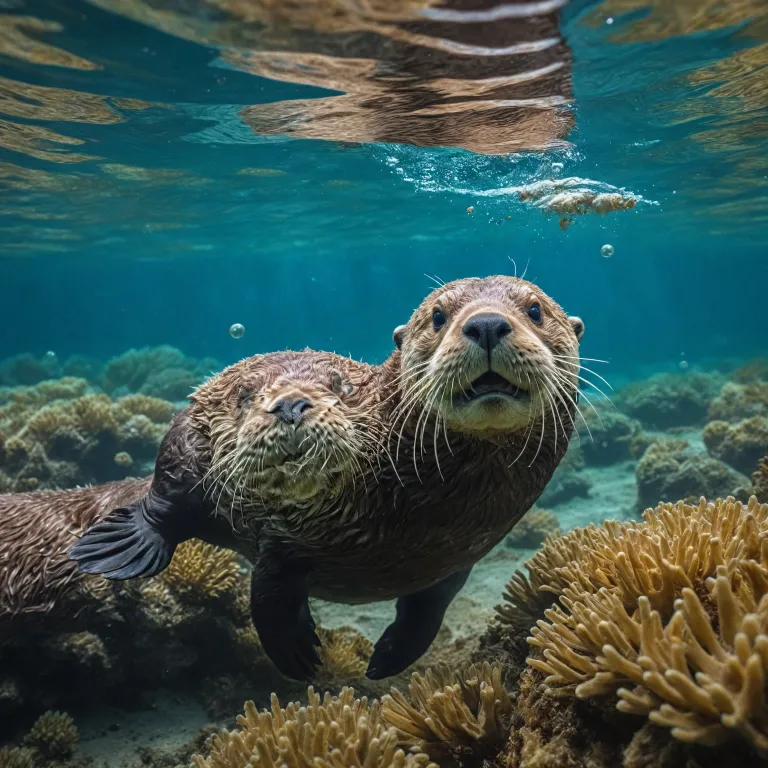
Physical distinctions between sea otters and sea lions in marine habitats
Sea otters and sea lions are two remarkable marine mammals that captivate wildlife enthusiasts along the Pacific coastline. The sea otter, known scientifically as Enhydra lutris, is a member of the weasel family and is among the smallest marine mammals, with males averaging 27 kg. In contrast, the California sea lion, a robust pinniped, can reach an impressive 300 kg. These differences in size are immediately apparent when observing these species in their natural waters.
Otters possess dense fur, which is considered the thickest of any animal, providing essential insulation in cold sea waters. Sea lions, on the other hand, rely on a layer of blubber beneath their skin for warmth. The external ear flaps of sea lions are a key distinguishing feature, setting them apart from true seals and otters, which lack such structures. Flippers also reveal much about their adaptation: sea otters have webbed hind feet for agile swimming, while sea lions boast large, elongated front flippers that allow them to "walk" on land and maneuver efficiently in water.
Harbour seals and elephant seals, often seen alongside these species, further highlight the diversity of marine mammals in regions like the Salish Sea and Race Rocks. While otters and seals share some aquatic adaptations, the presence of external ear flaps and the ability to rotate hind flippers forward are unique to sea lions. The river otter, a close relative, is often mistaken for its marine cousin but prefers freshwater rivers and lakes. Understanding these physical traits is essential for anyone seeking to appreciate the rich tapestry of species inhabiting our coastal waters.
Behavioral patterns and social structures in otters, sea lions, and seals
Behavioral differences between sea otters and sea lions are profound and influence their interactions within marine ecosystems. Sea otters are generally solitary or form small groups, floating together in kelp beds for safety and warmth. In contrast, sea lions are highly social, gathering in large colonies on rocky shores and sandy beaches. This social structure among sea lions is especially evident during breeding season, when males, or "lions," establish territories and compete for harems.
Otters, both sea and river species, exhibit playful behaviors, often seen using rocks as tools to crack open shellfish. Their dexterity and intelligence are hallmarks of their species. Sea lions, with their powerful vocalizations and coordinated group movements, display a different kind of social intelligence. Harbour seals and elephant seals, while less gregarious than sea lions, also form groups during certain times of the year, such as pupping and molting seasons.
For those interested in the intricate dynamics of marine mammal communities, exploring the behavioral contrasts between otters, seals, and sea lions offers valuable insights. The presence of external ear flaps in sea lions not only aids in identification but also plays a role in their communication and social interactions. To deepen your understanding of these fascinating animals, consider reading more about marine mammal social behavior and the unique ways each species interacts with its environment.
Habitat preferences: from California’s kelp forests to riverine environments
The habitats of sea otters and sea lions are as varied as their behaviors. Sea otters are most commonly found in coastal kelp forests along the northern and eastern North Pacific, including the California coast. These marine environments provide abundant food sources and shelter from predators. Sea otters are rarely seen far from the sea, as their dense fur requires regular grooming and access to water for thermoregulation.
California sea lions, however, inhabit a broader range, from southern British Columbia to northern Mexico. They frequent islands, mainland shorelines, and even venture into harbors and estuaries. Steller sea lions, another prominent species, prefer rocky outcrops and remote islands, often sharing space with harbour seals and elephant seals. River otters, in contrast, are adapted to freshwater rivers, lakes, and wetlands, though they occasionally venture into coastal waters.
These habitat preferences shape the daily lives of otters, seals, and sea lions, influencing their diet, social structure, and vulnerability to threats. The Salish Sea and Race Rocks are renowned for their diversity of marine mammals, offering opportunities to observe multiple species in close proximity. For a comprehensive guide to the best locations for wildlife viewing, visit our marine wildlife adventure resource and plan your next safari along the Pacific coast.
Dietary habits and ecological roles of otters, sea lions, and seals
The diets of sea otters and sea lions reflect their ecological niches within marine ecosystems. Sea otters consume a remarkable 25% of their body weight daily, feeding on sea urchins, crabs, mollusks, and fish. Their foraging behavior helps maintain the health of kelp forests by controlling sea urchin populations. River otters, while similar in appearance, focus on freshwater prey such as fish, amphibians, and crustaceans.
Sea lions, including California and Steller species, have a more varied diet, consuming fish, squid, and occasionally octopus. Their daily food intake is about 5% of their body weight, reflecting their larger size and different metabolic needs. Harbour seals and elephant seals also play vital roles as predators in marine food webs, targeting fish and cephalopods. The interplay between these species ensures balance within their respective habitats.
Occasionally, interactions between species can be surprising. As noted in the expert dataset, "While rare, there have been documented instances of sea lions preying on sea otters. However, this behavior is not typical and is considered opportunistic." Such events highlight the complexity of marine ecosystems and the adaptability of marine mammals.
Conservation challenges facing sea otters, sea lions, and related species
Conservation efforts for sea otters, sea lions, and other marine mammals are increasingly urgent due to habitat loss, pollution, and human activities. Sea otters are particularly vulnerable to oil spills, which compromise the insulating properties of their fur and can lead to hypothermia. Entanglement in fishing gear and predation by orcas also pose significant threats to otter populations. River otters face similar dangers in freshwater environments, including habitat degradation and water pollution.
Sea lions, especially California and Steller species, are threatened by illegal shootings, entanglement in fishing nets, and competition for food resources. Harbour seals and elephant seals are not immune to these challenges, as they too encounter disturbances from human activity and environmental changes. The presence of external ear flaps in sea lions and the unique adaptations of otters and seals underscore the need for species-specific conservation strategies.
Public awareness and education play a crucial role in supporting conservation initiatives. As highlighted in the expert dataset, "Sea otters face threats from oil spills, predation by orcas, and entanglement in fishing gear. Sea lions are threatened by human activities, including illegal shootings and entanglement in fishing nets." By understanding the unique needs of each species, we can foster greater appreciation and protection for marine mammals across the Salish Sea, California, and beyond.
How to responsibly observe otters, sea lions, and seals in the wild
Wildlife enthusiasts seeking to observe sea otters, sea lions, and seals should prioritize responsible viewing practices. Maintaining a respectful distance is essential to avoid disturbing these sensitive marine mammals. Binoculars and telephoto lenses allow for close observation without encroaching on their natural behaviors. In regions like Race Rocks and the Salish Sea, guided tours led by marine biologists offer educational experiences while minimizing impact on the animals.
Understanding the differences between otters, seals, and sea lions enhances the wildlife viewing experience. Look for external ear flaps to identify sea lions, note the dense fur of sea otters, and observe the unique movements of harbour and elephant seals. River otters are more likely to be seen along freshwater rivers and lakes, while sea otters and sea lions frequent coastal waters and rocky shores. Always follow local regulations and guidelines to ensure the safety of both wildlife and observers.
For those planning a safari or wildlife adventure, choosing reputable operators and supporting conservation-focused initiatives can make a significant difference. By appreciating the diversity of marine mammals and their habitats, we contribute to the ongoing protection of otters, seals, and sea lions for future generations to enjoy.
Key statistics on sea otters, sea lions, and related marine mammals
- Average weight of male sea otters: 27 kg
- Average weight of male California sea lions: 300 kg
- Daily food intake of sea otters: 25% of body weight
- Daily food intake of sea lions: 5% of body weight
Frequently asked questions about sea otters, sea lions, and seals
Do sea lions eat sea otters?
While rare, there have been documented instances of sea lions preying on sea otters. However, this behavior is not typical and is considered opportunistic.
How do sea otters and sea lions differ in their social behaviors?
Sea otters are generally solitary or form small groups, whereas sea lions are highly social, often forming large colonies.
What are the primary threats to sea otters and sea lions?
Sea otters face threats from oil spills, predation by orcas, and entanglement in fishing gear. Sea lions are threatened by human activities, including illegal shootings and entanglement in fishing nets.
For further reading, consult reputable sources such as the NOAA Fisheries, the IUCN Red List, and the Marine Mammal Center.