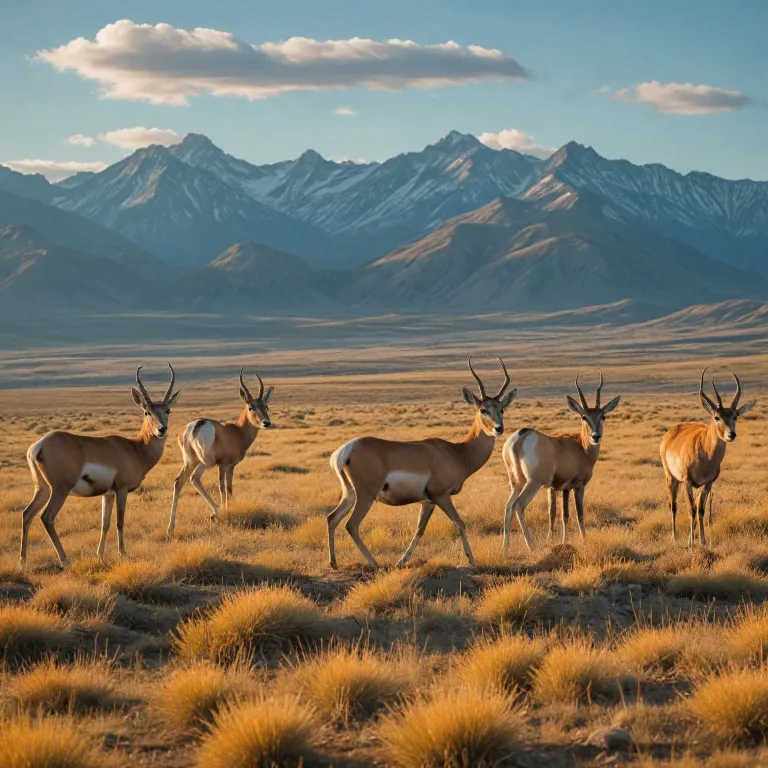
The evolutionary journey of pronghorns across North America
Pronghorns, scientifically known as Antilocapra americana, represent a remarkable lineage among North American animals. Their evolutionary timeline stretches back approximately 20 million years, originating during the Miocene epoch. This extraordinary duration positions pronghorns as one of the continent’s oldest surviving species, with a history deeply intertwined with the shifting landscapes and climates of North America. The pronghorn antelope’s unique features, such as its second fastest land speed among animals, are not mere accidents of nature but the result of millennia of adaptation. These adaptations allowed pronghorn populations to thrive in diverse areas, from the open grasslands of western North America to the arid plateaus near sea level. The body size of pronghorns, typically ranging from 90 to 150 centimeters in length, and their distinctive scent glands, have played vital roles in their survival. Their evolutionary journey is a testament to resilience, as pronghorns have survived mass extinctions and dramatic environmental changes that eliminated many other species. Today, living pronghorn populations continue to roam vast ranges, especially in the United States, where conservation efforts have stabilized their numbers in many regions.
Adaptations that shaped the pronghorn antelope’s survival
The pronghorn’s survival is closely linked to its exceptional adaptations, which distinguish it from other North American species such as deer and antelope. Unlike true antelope, pronghorns are the sole surviving members of the Antilocapridae family, with no close living relatives. Their features include large eyes for detecting predators, a lightweight body size for swift movement, and specialized hooves for traversing varied terrain. The pronghorn’s range extends across western North America, where access to water sources is often limited. Their ability to efficiently utilize water and extract moisture from vegetation has been crucial for survival in arid areas. The scent glands located on their necks and rumps serve as communication tools, marking territory and signaling to other pronghorns. During the Pleistocene epoch, pronghorns coexisted with the American cheetah, a now-extinct predator. This evolutionary pressure led to the development of their remarkable speed, making them the fastest land animals in North America and the second fastest globally. As a result, pronghorn populations have maintained a stable presence in national parks and protected areas, where their unique adaptations continue to fascinate naturalists and wildlife enthusiasts. For those interested in exploring more about pronghorn habitats and conservation, the comprehensive wildlife travel guide offers valuable insights.
Pronghorn populations: distribution, range, and conservation
Pronghorn populations are primarily concentrated in the western United States, with significant numbers also found in parts of Canada and northern Mexico. Their range encompasses vast grasslands, sagebrush plains, and semi-arid regions, often at elevations from sea level up to 2,000 meters. The American pronghorn’s ability to adapt to diverse habitats has contributed to its resilience, but habitat fragmentation and water scarcity remain ongoing challenges. Conservation initiatives have played a pivotal role in stabilizing pronghorn populations in many areas, particularly in states like Wyoming, where numbers have reached several hundred thousand individuals. The management of water sources and the preservation of migration corridors are essential for sustaining healthy pronghorn populations. Hunting regulations and monitoring programs help maintain a balanced population, ensuring that pronghorns continue to thrive alongside other native species such as deer and game fish. The national park conservation programs provide further details on efforts to protect pronghorn habitats and support their long-term survival. These programs emphasize the importance of scientific research, including genetic studies and morphological assessments, to inform effective conservation strategies.
Unique features and behaviors of pronghorns in the wild
Pronghorns are renowned for their distinctive features, including their forked horns, which are present in both males and females, though more prominent in males. These horns can grow up to 30 centimeters (about 12 inches long), and are shed and regrown annually. The pronghorn’s keen eyesight, facilitated by large eyes positioned high on the head, allows them to detect movement across vast distances, an essential adaptation for survival in open habitats. Social behaviors among pronghorns are complex, with males establishing territories during the breeding season and females forming nursery groups to protect their young. Scent marking is a common behavior, used to delineate territories and communicate reproductive status. Pronghorns are also known for their endurance, capable of maintaining high speeds over long distances, a trait that once helped them evade predators like the American cheetah. Their diet consists mainly of grasses, forbs, and shrubs, with a preference for areas near water sources, especially during dry periods. The ability to extract moisture from food allows pronghorns to inhabit regions where water is scarce, further highlighting their adaptability. For travelers seeking to observe these remarkable animals, national parks and protected areas across North America offer prime opportunities to witness pronghorns in their natural environment.
The role of pronghorns in North American ecosystems
Pronghorns play a vital role in the ecosystems of western North America, serving as both prey and grazers. Their presence influences plant communities, as their selective grazing patterns help maintain the balance of grasses and shrubs. Pronghorns also contribute to the food web, supporting predators such as coyotes and, historically, the American cheetah. The movement of pronghorn populations across large ranges facilitates seed dispersal and nutrient cycling, enhancing the health of grassland ecosystems. Conservationists and American naturalists have long recognized the importance of pronghorns in maintaining ecological integrity. Efforts to protect migration corridors and water sources not only benefit pronghorns but also support a diverse array of wildlife, including deer, game fish, and numerous bird species. The resilience of pronghorn populations in the face of environmental change underscores their significance as a keystone species.
Scientific research and the future of pronghorn conservation
Ongoing scientific research is essential for understanding the evolutionary history and conservation needs of pronghorns. Fossil analysis, comparative anatomy, and advanced genetic studies have shed light on the origins and adaptations of Antilocapra americana. Radiometric dating techniques confirm that pronghorns date back to the Miocene epoch, making them one of the oldest living species in North America. The use of DNA sequencing has allowed researchers to trace evolutionary lineages and identify factors contributing to the pronghorn’s survival through mass extinctions. Conservationists collaborate with paleontologists and evolutionary biologists to develop strategies that address current threats, such as habitat loss and water scarcity. The integration of technology, including wildlife tracking apps, enhances the monitoring of pronghorn populations and migration patterns. As pronghorns continue to face challenges from climate change and human development, informed conservation efforts are crucial for ensuring their future. "Pronghorns' adaptability and unique evolutionary traits have enabled them to survive events that led to the extinction of many other species." This resilience offers hope for the continued presence of pronghorns in North American landscapes, inspiring future generations of wildlife enthusiasts and researchers alike.
Key statistics on pronghorns and their evolutionary history
- Pronghorn top speed: 60 miles per hour (96.5 kilometers per hour)
- Pronghorn population in Wyoming: 600,000 individuals
Frequently asked questions about pronghorns and their origins
What is the closest living relative to the pronghorn?
The pronghorn is the sole surviving member of the Antilocapridae family and has no close living relatives.
Why are pronghorns so fast?
Pronghorns evolved their remarkable speed as an adaptation to evade fast predators like the now-extinct American cheetah.
How have pronghorns survived past mass extinctions?
Pronghorns' adaptability and unique evolutionary traits have enabled them to survive events that led to the extinction of many other species.
References: National Wildlife Federation, Wildlife Genetic Health Project, American Naturalist.