Why wild animals in Ethiopia belong on your African safari map
Ethiopia sits at a crossroads of Africa where high plateaus, deep valleys, and Rift Valley lakes shape an extraordinary cradle for wildlife. The country holds around 284 recorded mammal species and roughly 861 bird species, according to the Ethiopian Biodiversity Institute and BirdLife International, which means any safari focused on wild animals in Ethiopia can rival more famous destinations while feeling far less crowded. For travellers who value space, silence, and a sense of being truly free in nature, these highlands and mountains in Ethiopia offer a different rhythm from the classic savannah game drive.
The story of Ethiopia wildlife is written in its elevations, from the Simien Mountains to the Bale Mountains and down to the lowland lakes. Endemic animals in Ethiopia such as the Ethiopian wolf, the gelada monkey, and the walia ibex evolved in isolation on these mountain plateaus, creating a safari experience that is as much about geology as it is about animals. When you plan a safari day here, you are not only looking for lions or a passing baboon troop; you are tracing the ancient uplift of the Horn of Africa through every escarpment and valley.
Conservation authorities such as the Ethiopian Wildlife Conservation Authority and the Ethiopian Biodiversity Institute coordinate national park management, wildlife monitoring, and community engagement to protect these animals Ethiopia treasures. Their work underpins the long-term survival of Ethiopian wolves and other threatened species, and it also shapes how visitors move through each national park. Respecting local guidelines, keeping a safe distance from every monkey or hyena, and supporting eco-friendly operators are not optional niceties; they are the foundation of ethical encounters with wild animals in Ethiopia.
Simien Mountains National Park: home of the gelada and the walia ibex
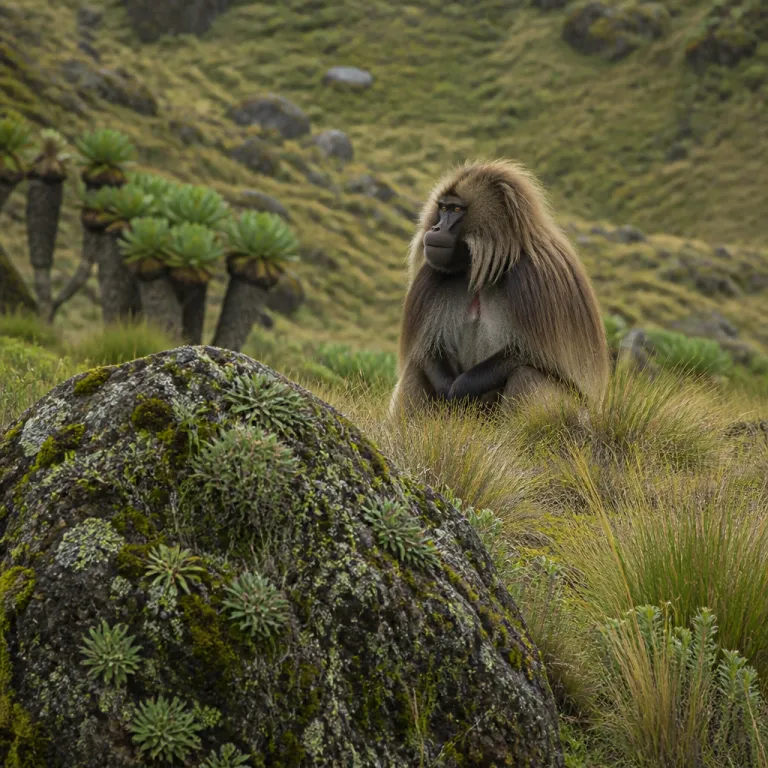
Simien Mountains National Park is the best-known highland sanctuary for wild animals in Ethiopia, and it fully deserves its reputation. Here the mountains rise in sheer basalt cliffs, and every clear day reveals layered ridges where gelada monkeys graze like shaggy, red-chested sheep. The combination of dramatic mountains Ethiopia scenery and approachable wildlife makes the Simien one of Africa’s most photogenic trekking destinations.
The gelada, sometimes called the bleeding heart monkey, is not a true baboon although it is closely related to baboons and other monkeys. You will often hear guides refer to the “monkey gelada” or “heart monkey” when they point out the bare crimson patch on each chest, a signal used in complex social displays among both single gelada and larger gelada monkey groups. Watching a family of gelada monkey adults calmly pluck grass while youngsters tumble nearby is one of the most intimate wildlife moments you can have in any national park.
Higher on the cliffs, the walia ibex navigates ledges that seem impossible, reminding visitors that these mountain landscapes are still truly wild. Rangers working with the Ethiopian Wildlife Conservation Authority use wildlife monitoring systems and strict anti-poaching patrols to protect this ibex and other animals Ethiopia shelters in the Simien. As one senior ranger explained, “When guests keep to the paths and listen to their guides, the ibex relax, and you see their natural behaviour instead of fear.” If you are planning a multi-day trek, consider combining time on the main escarpment with a stay in community-run camps, then read about how resilient family-owned safari properties operate in other parts of Africa through this analysis of a reimagined private lodge in Madikwe.
Bale Mountains: tracking the Ethiopian wolf on the Sanetti Plateau
The Bale Mountains form the second great highland stronghold for wild animals in Ethiopia, and they feel markedly different from the Simien. On the Sanetti Plateau, the landscape opens into Afro-alpine moorland where giant lobelias punctuate the horizon and the air feels thin and sharp. This is the realm of the Ethiopian wolf, the world’s rarest canid and the flagship of Ethiopia wildlife conservation.
Spotting a single Ethiopian wolf requires patience, but the reward is unforgettable when a slender red figure trots across the heather in clear morning light. Packs of Ethiopian wolves hunt rodents by day, listening intently and then pouncing with a swift, high leap that photographers dream of capturing. Because fewer than 600 individuals remain, based on IUCN Red List assessments, every sighting carries weight, and guides will explain how disease control and habitat protection in Bale Mountains National Park are critical to their survival.
Beyond the wolves, Bale Mountains host a rich cast of animals Ethiopia proudly protects, from mountain nyala to endemic birds that draw serious ornithologists. A typical safari day might start with a sunrise drive across the plateau, continue with a hike through the Harenna Forest where you may glimpse a shy monkey or forest hyena, and end with stargazing under a sky almost free of light pollution. To understand how such immersive journeys compare with lowland savannah trips, you can read this narrative on how an African savannah safari feels like a living game and then adapt its lessons to the high-altitude context of Bale.
Urban edges and cultural encounters: hyenas in Harar and beyond
Not all wild animals in Ethiopia live far from people; some thrive at the edge of ancient cities. In the walled city of Harar, hyenas have long roamed the outskirts, feeding on organic waste and occasionally being offered scraps by residents. This unusual coexistence has given rise to the figure of the “hyena man Harar”, sometimes shortened to “hyena man”, who calls spotted hyenas at night and feeds them by hand.
Watching a single hyena pad silently out of the darkness toward the man Harar residents know well can be both unsettling and fascinating. Visitors often sit in a loose circle while several hyenas gather, their eyes catching the light as they wait for meat, and this close contact challenges many assumptions about Africa’s most misunderstood carnivores. While such encounters are not a traditional safari, they reveal how Ethiopian culture and wildlife have intertwined for centuries in ways that go beyond national park boundaries.
Elsewhere, cities like Addis Ababa and Bahir Dar act as gateways to more remote wildlife areas, yet they also host their own urban animals. Troops of monkey species and the occasional baboon can be seen on the fringes of green spaces, reminding travellers that animals Ethiopia protects do not always respect human zoning. When planning your route between Addis Ababa, Harar, and the highland parks, allow an extra day in each place to appreciate how the heart of Ethiopia beats where people and wildlife meet.
Lakes, lowlands, and riverine habitats: beyond the high mountains
While the highlands dominate many itineraries focused on wild animals in Ethiopia, the country’s lakes and lowlands add essential ecological contrast. Lake Chamo in the south, for example, is famous for large Nile crocodiles and hippos that surface near traditional fishing boats. A boat safari day here offers a different perspective on Ethiopia wildlife, with birdlife crowding the shoreline and the distant outline of mountains Ethiopia framing the horizon.
Further north, the area around Bahir Dar and Lake Tana blends cultural heritage with wildlife watching, as monasteries share the landscape with wetlands rich in birds and smaller animals. Travellers who combine these lake systems with visits to a national park such as Nech Sar or Awash gain a fuller sense of how animals Ethiopia shelters move between riverine forests, savannah, and escarpments. This mosaic of habitats across Africa’s Great Rift Valley explains why Ethiopia supports both endemic highland specialists and more widespread species like baboons and monkeys.
For those comparing destinations across continents, it can be helpful to read about other water-based expeditions such as polar voyages, then reflect on how they differ from a Lake Chamo cruise. An in-depth briefing on current Antarctica cruise and wildlife expeditions shows how climate, logistics, and conservation priorities shift from ice to equator. Yet the underlying principle remains the same; respectful proximity to wildlife, whether crocodiles or penguins, depends on strict guidelines and informed guides.
Planning an ethical Ethiopian safari: routes, seasons, and conservation impact
Designing a journey focused on wild animals in Ethiopia starts with choosing a realistic route that matches your time and interests. Many travellers begin in Addis Ababa, then fly to either the Simien Mountains or Bale Mountains before adding a cultural extension to Harar or a lake-based stay near Bahir Dar. This triangle links the heart of Ethiopia’s highland wildlife with its historic cities, while keeping travel days manageable.
Seasonality matters because weather shapes both wildlife behaviour and road conditions in every national park. Dry months from roughly October to March usually offer clearer views in the mountain areas and easier access to remote plateaus where Ethiopian wolves and walia ibex live, while the green season brings richer colours and dramatic clouds over the escarpments. Ask your operator to structure each safari day around early morning and late afternoon activity peaks, leaving midday free for rest or cultural visits.
Ethical impact should guide every decision, from choosing community-based lodges to hiring local guides trained by the Ethiopian Wildlife Conservation Authority and its partners. Their conservation education programmes emphasise three simple visitor rules: “Respect wildlife habitats. Follow local guidelines. Support eco-friendly tourism.” When you align your spending with these principles, you help ensure that Ethiopia wildlife, from gelada monkeys to the elusive Ethiopian wolf, continues to thrive for future travellers and for the communities who share their land with these animals.
Key figures on Ethiopian wildlife and conservation
- Ethiopia hosts about 284 recorded mammal species, including 31 endemic mammal species such as the Ethiopian wolf, gelada monkey, and walia ibex, according to the Ethiopian Biodiversity Institute; this level of endemism makes the country a global priority for mountain conservation.
- There are 9 officially designated national parks in Ethiopia, forming the backbone of the country’s protected area network and providing core refuges for wild animals in Ethiopia across both highland and lowland ecosystems.
- Birdwatchers can encounter roughly 861 bird species within Ethiopia’s borders, a figure reported by BirdLife International that places the country among Africa’s richest ornithological destinations and supports the growth of specialised birding safari itineraries.
- The Ethiopian wolf is classified as Endangered on the IUCN Red List, with fewer than 600 individuals remaining in fragmented populations across the Bale Mountains and other highland plateaus, which underscores the importance of disease control and habitat protection programmes.
- Conservation authorities report a rise in community-based conservation initiatives and eco-tourism projects, which together aim to enhance biodiversity, improve local livelihoods, and maintain ecological balance in key landscapes such as the Simien Mountains and Bale Mountains.
FAQ about wild animals in Ethiopia and highland safaris
What are the most iconic endemic animals in Ethiopia?
The most iconic endemic animals in Ethiopia are the Ethiopian wolf, the gelada monkey, and the walia ibex, all of which are closely associated with high mountain habitats. Travellers usually see gelada monkeys in the Simien Mountains, while Ethiopian wolves are most reliably observed on the Sanetti Plateau in the Bale Mountains. The walia ibex is restricted to steep cliffs in Simien Mountains National Park, where ranger-guided walks offer the best viewing opportunities.
How many national parks does Ethiopia have for wildlife viewing?
Ethiopia currently has 9 national parks that provide structured opportunities to see wild animals in Ethiopia, ranging from highland plateaus to lowland savannah and Rift Valley lakes. Well-known examples include Simien Mountains National Park, Bale Mountains National Park, Awash National Park, and Nech Sar National Park. Each park protects different ecosystems, so combining at least two or three gives a more complete picture of Ethiopia wildlife.
Where is the best place to see Ethiopian wolves in the wild?
The Bale Mountains, particularly the Sanetti Plateau, offer the most reliable sightings of Ethiopian wolves in their natural habitat. Early morning drives across the open moorlands give you the best chance to watch single wolves or small groups hunting rodents by day. Because the species is endangered with fewer than 600 individuals remaining, responsible guiding and strict adherence to distance rules are essential.
Is it safe and ethical to watch hyenas with the “hyena man” in Harar?
Watching hyenas with the so-called “hyena man” in Harar is generally considered safe when organised through reputable local guides who follow municipal guidelines. The practice reflects a long history of coexistence between people and hyenas in this Ethiopian city, but it remains controversial among some conservationists due to feeding and habituation. Visitors should keep a respectful distance, avoid sudden movements, and treat the experience as a cultural encounter rather than a conventional safari.
How can travellers support wildlife conservation during an Ethiopian safari?
Travellers can support conservation by choosing operators who work closely with the Ethiopian Wildlife Conservation Authority and community organisations, ensuring that park fees and local employment generate direct benefits. Staying in community-run camps, hiring local guides, and buying crafts from nearby villages all help align tourism with long-term protection of wild animals in Ethiopia. Following park rules, minimising waste, and sharing accurate information about Ethiopia wildlife after your trip further strengthen these efforts.